
NTFS installs security camera systems for commercial facilities, industrial sites, and remote operations across Canada. Our technicians handle structured cabling, PoE network setup, NVR hardware installation, and AI configuration required to complete installations
We work on single-site projects, multi-location rollouts, and remote or off-grid deployments.
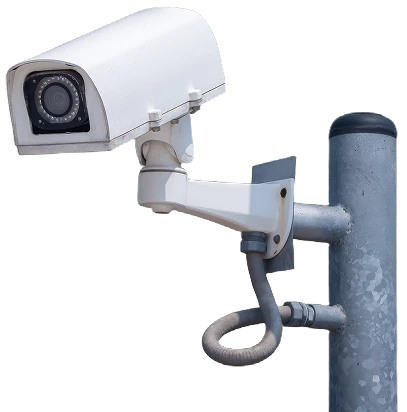

Ten years ago, most commercial camera systems did one thing: record footage to a DVR. Reviewing it meant someone scrubbing through hours of video after an incident.
Current AI security cameras classify what they see: person, vehicle, animal. They trigger alerts on specific events and let you search recorded footage by object or activity rather than timestamp. On industrial sites with large perimeters, limited after-hours staff, and expensive equipment left unattended, that changes what the system can do.
Getting this to work takes more than buying AI-capable cameras. Camera placement, cable runs, PoE switch capacity, NVR configuration, and alert rule tuning all determine whether the system performs. That is the installation work NTFS carries out.
Many current commercial and industrial cameras support AI-based detection. What is available depends on the camera model and configuration.
Flags human activity in restricted areas, yards, entrances, and perimeters. Tracks vehicles at gates, loading areas, parking lots, and equipment zones.
Virtual tripwires and line-crossing detection flag boundary breaches. Loitering detection identifies people who stay near gates, fuel storage, or restricted areas longer than expected.
Runs detection locally. For remote and industrial sites where internet is inconsistent, local processing keeps the system working when the connection drops.
NTFS can advise on what is achievable for your specific site, camera budget, and network setup.
Logs vehicles at gates and high-security entrances. Camera positioning, resolution, and lighting conditions all affect accuracy.
Sends a notification when a specific event occurs rather than requiring manual footage review. Smart search lets you find clips by person, vehicle, or object instead of scrubbing by timestamp.
For a detailed breakdown of how AI detection works and what to expect from each feature, read our AI security cameras guide.
Traditional motion detection responds to shadows, wind, animals, and rain the same way it responds to an intruder. AI cameras can tell the difference. On outdoor industrial sites, that cuts down on the alert noise that makes conventional systems impractical to monitor.
Teams get a notification when the system detects something specific: a person entering a restricted area at 2am, or a vehicle where none should be. No one has to review footage manually to find out something happened.
Construction sites, warehouses, remote camps, and industrial yards carry the most risk when staff are off-site. Detection zones and tripwires give visibility across fence lines and access points that would be impractical to staff in person.
On-site NVR storage means the system keeps recording when the internet connection is down. For remote sites, this is a basic requirement.
To see how this works on a real industrial deployment, read our UniFi G5 Pro industrial review, which covers hardware specs, cold-weather limits, and AI integration in practice.
NTFS installs across construction sites, oil and gas, mining, remote work camps, warehouses, utilities, transportation yards, manufacturing facilities, commercial buildings, and off-grid locations. Any site with a large footprint, expensive equipment, or limited on-site staff.
For sites with extreme temperatures, heavy dust, or moisture exposure, see our guide to security cameras for harsh industrial environments, covering IP ratings, IK10 impact specs, and cold-weather installation down to -40°C.
Remote work camps, industrial yards, and off-grid sites need a different installation approach than a commercial office. The camera hardware is one part of it. The bigger questions are power, connectivity, local storage, environmental ratings, and remote access.
A camera that works fine in a warehouse may fail at a remote site if the installation does not account for the operating environment: temperature range, IP rating, enclosure mounting, cable protection, and backup power.
NTFS installs remote site camera systems designed to work with satellite connectivity, cellular, SD-WAN, backup power, and on-site NVR storage. The system records and processes locally. Remote viewing and off-site alerts work when connectivity allows, but recording does not depend on them.
For a closer look at what remote camera deployment involves in practice, including power, Starlink connectivity, and hardware selection, read our guide on security cameras for remote locations.
We walk the site and work with our client to identify high-risk areas, noting entrances and blind spots, and ask about operational requirements before recommending camera positioning.
Camera types, mounting positions, fields of view, NVR size, storage retention targets, and network requirements based on what the site actually needs.
Cameras, mounts, structured cabling, PoE switches, network hardware, and NVR equipment installed by our technicians.
Detection zones, alert rules, recording schedules, access permissions, and remote viewing set up and tested.
Camera angles, low-light performance, AI detection accuracy, and remote access verified before handoff. For post-installation needs, your equipment provider or IT team will handle ongoing support. NTFS is available for additional installation work, system expansions, and site add-ons.
Have questions about security camera installation for your site? Browse the FAQs below or get in touch with an expert and we’ll respond shortly.
Traditional CCTV records footage. Someone has to review it manually. AI cameras classify activity as it occurs, send alerts based on specific events, and let you search recordings by object or activity type.
Yes, when configured properly. AI cameras distinguish between a person walking through a gate and a tree branch moving in the wind. For outdoor industrial sites, that distinction is the difference between a system your team monitors and one they start ignoring.
On-site NVR systems record and process AI detection locally without internet access. Internet is needed for remote viewing, off-site alerts, cloud backup, and software updates.
Yes. NTFS installs commercial, industrial, and remote site camera systems across Canada through a network of over 90 technicians.
A security camera installer handles the physical deployment of a camera system, including mounting cameras, running structured cabling, setting up PoE switches, installing NVR hardware, configuring detection zones and alert rules, and verifying the system works before handoff. NTFS specifically operates as the installation arm for clients and their technology partners. We do not sell camera equipment or provide ongoing technical support. Clients or their equipment vendors select the hardware; NTFS installs it to specification.
Commercial security camera installation costs in Canada vary based on the number of cameras, site size, cable run distances, NVR storage requirements, and whether the site is a standard commercial building or a remote or off-grid location. NTFS quotes are based on the specific scope of each project. Single-site installations, multi-location rollouts, and remote deployments are each priced differently. Contact NTFS to discuss your site requirements and receive a project-specific quote.
Yes, but only with the right hardware and installation approach. Most commercial outdoor cameras are rated to -25°C natively. For Canadian environments that regularly drop to -40°C, common across northern Alberta, the territories, and remote work camps, NTFS installs cameras inside thermostatically controlled heated enclosures. These housings maintain the camera at an operational temperature and prevent frost from building on infrared lenses. Without a heated enclosure, cameras will fail mechanically in sustained extreme cold.
PoE stands for Power over Ethernet. A PoE security camera system runs both data and electrical power through a single network cable, eliminating the need for separate power outlets at each camera location. For industrial sites, warehouses, and remote facilities, this significantly reduces installation complexity and cost, particularly across large footprints where running separate power to every camera position would be impractical. NTFS technicians handle PoE switch setup, cable runs, and network configuration as part of every camera installation.
For outdoor industrial use, IP66 or IP67 is the recommended minimum. The first digit (6) means the camera is fully dust-tight. The second digit (6 or 7) means it is protected against powerful water jets or temporary submersion. In environments with heavy dust, driving rain, or freeze-thaw cycles, which covers most Canadian industrial and remote sites, cameras with a lower IP rating will fail prematurely from moisture or particle ingress. Sites with vandalism risk should also look for an IK10 impact rating, which means the housing can absorb a 20-joule impact without failing.
Yes. NTFS installs security camera systems at remote work camps, industrial yards, mining sites, oil and gas facilities, and off-grid locations across Canada. Remote installations require a different approach than standard commercial sites. NTFS technicians account for power availability, satellite or cellular connectivity, NVR local storage, camera housing ratings for the operating environment, and cable protection against temperature extremes. Systems are designed to record and process locally so they continue operating when internet connectivity is intermittent.
An NVR (Network Video Recorder) works with IP-based cameras and handles video storage, AI detection processing, and remote access over a network. A DVR (Digital Video Recorder) works with older analogue cameras and records footage locally without network processing capability. For commercial and industrial security camera systems, NVR is the current standard. It supports AI-enabled cameras, PoE networking, remote viewing, and on-site processing, all of which are relevant for modern industrial and remote site deployments. NTFS installs NVR-based systems as part of complete camera installation projects.
Installation time depends on the size of the site, the number of cameras, the length and complexity of cable runs, and whether the site requires non-standard conditions such as heated enclosures or off-grid power integration. A standard commercial building with a small number of cameras can typically be completed in one to two days. Larger industrial sites, multi-building facilities, and remote deployments with infrastructure requirements will take longer. NTFS provides a timeline estimate as part of the project scoping process.
Industrial security camera systems are used across construction, oil and gas, mining, warehousing and logistics, utilities and critical infrastructure, transportation and fleet yards, manufacturing, remote work camps, and commercial campuses. Sites in these sectors typically have large footprints, expensive or high-risk equipment, limited after-hours staffing, and access points that are difficult to monitor manually. These are all conditions where AI-enabled cameras and on-site NVR recording provide the most operational value. NTFS installs camera systems across all of these environments throughout Canada.
NTFS is an installation service, not a camera equipment supplier. Clients typically work with their technology vendor or equipment partner to select the camera hardware, NVR, and networking components. NTFS then installs the system to specification, handling camera mounting, structured cabling, PoE switch setup, NVR installation, and AI configuration. If you need guidance on camera layout and coverage planning before installation begins, NTFS can assist with those recommendations as part of the project scoping process.
NTFS provides skilled technicians to install your security camera system according to the provided specifications, ensuring proper coverage, connectivity, and storage.
