
Remote operations lose millions to equipment theft and downtime. High-value assets sit isolated in the Northern Alberta oil sands, British Columbia mining corridors, and Saskatchewan energy grids.
These locations lack on-site guards. They suffer from heavily constrained satellite internet. Extreme weather breaks legacy motion detection. Fixing this requires an industrial security camera system built specifically for autonomous threat classification, local data processing, and highly resilient network routing.
Ai Security Camera Vs Traditional CCTV: What’s The Difference?
Traditional CCTV functions as a passive forensic tool. It documents the loss. You review the video hours after perpetrators strip a site of copper wire. It relies entirely on pixel-variation motion detection. Any shift in lighting, rain, or background movement triggers a recording and an alarm. This approach creates a 92% to 98% false positive rate in outdoor environments.
A commercial security camera system AI platform operates as an active, real-time security agent. It:
- Analyzes the environment.
- Classifies anomalies as they happen.
- Executes autonomous deterrence protocols.
The detection trigger shifts from general pixel change to neural network object classification. This drops the false positive rate below 5% after site-specific calibration.
Algorithmic detection cuts the time to detect an intruder from 15 minutes to under 30 seconds. It replaces the reactive expense of guards with a proactive asset.
What AI Features Do Security Cameras Have?
Historically, advanced video analytics had to send massive volumes of data to cloud servers. This led to high latency and needed massive bandwidth. Modern setups invert this model. They put multi-trillion operations-per-second (Multi-TOPS) AI engines directly inside the camera hardware and the local Network Video Recorder (NVR).
This edge AI processing security camera setup guarantees split-second response times. The intelligence stays on-site. The system reacts instantly, even if the external network connection goes down.
What is smart detection on security cameras?
Smart detection stops the false alarms caused by basic pixel tracking. An intelligent motion detection camera uses computer vision to classify what it sees before it ever generates an alert. It analyzes the geometric shape, size, and movement path of an object in milliseconds.
A smart security camera with person detection uses skeletal mapping. It maps the human form to tell the difference between a person and a swaying tree branch.
These systems also execute exact vehicle classification. The engine tells the difference between cars, trucks, motorcycles, and bicycles. Logistics managers use this to track specific transport assets moving across a facility.
Can AI cameras detect humans vs animals outdoors?
Yes. Remote locations generate constant motion alerts from deer, coyotes, livestock, and birds. Neural network models train on massive outdoor datasets to filter this specific noise.
When something enters the frame, the system runs a fast contextual analysis. It processes the size, movement pattern, and heat signature of the subject.
A perimeter detection camera system definitively distinguishes a bear crossing a boundary from a human trespasser breaching the exact same zone. The system sends emergency alerts exclusively when it verifies a human shape. This exact environmental filtering makes autonomous monitoring of isolated sites possible.
How Does AI Reduce False Alarms In Security Cameras?
False alarms create alarm fatigue. When security operators see hundreds of alerts per hour caused by wind-blown debris or heavy rain, their response times drop. Genuine threats slip through.
AI decouples detection from simple visual changes. It anchors alerts to complex object recognition. A traditional camera sees a swaying tree branch as a massive visual disturbance and triggers a system-wide alert. An AI-powered system analyzes that exact same swaying branch, identifies it as environmental noise lacking a human skeletal framework, and silently ignores it.
NVR AI analytics local processing engines use continuous learning models. When deployed, the system runs a calibration period. This takes 72 hours. The engine maps the specific environmental noise profile of each camera’s unique field of view. The system learns the location of objects that move constantly. It learns the exhaust plumes. It maps the HVAC fans. It tracks the automated doors. It dynamically adjusts its sensitivity thresholds around these items.
Implementing video surveillance AI analytics cuts false alarm rates by up to 90%. Remote monitoring guards only get notified when a verified, actionable threat requires an immediate response.
Advanced Video Surveillance AI Analytics
AI systems move beyond general object tracking. They use specialized spatial and biometric models for exact identification and tight access control.
License Plate and Facial Recognition
Server-heavy plate tracking is dead. A dedicated license plate recognition security camera (like the UniFi AI Theta) uses AI models trained on alphanumeric plate geometry, international fonts, and reflective wavelengths.
Standard cameras fail at night. Vehicle headlights blind the sensor. The UniFi AI Theta fixes this using a dual-lens setup. A wide lens captures the overall vehicle context. A narrow telephoto lens optimizes purely for the plate. It uses infrared (IR) light tuned specifically to plate-reflective wavelengths to cut through the headlight glare.
The commercial NVR security system reads these plates in under 500 milliseconds. It checks the data against local allowlists to instantly open automated gates for authorized transport trucks.
Facial recognition works simultaneously. Facility administrators enroll approved contractors or banned trespassers into the NVR’s secure local database. The system matches faces across all live and recorded video streams. Security personnel map an individual’s exact movement path across a massive industrial campus without manually scrubbing through hours of video.
Security Camera Intrusion Detection System Capabilities
Spatial analytics create invisible, highly responsive barriers. A security camera intrusion detection system relies on virtual tripwires to define directional line-crossing events. Operators draw a digital line along a fenceline inside the camera’s software. They set the system to sound an alarm only when a human or vehicle crosses from the outside in. The system completely ignores authorized outbound movement.
Loitering detection pairs with these tripwires. Facility managers set hard wait-time limits, usually 15 to 30 seconds. If a person stands outside a secure access gate for longer than the limit, the system flags the persistent presence. This interrupts pre-intrusion scouting.
Intelligence also covers the acoustic domain. Edge processing classifies specific sound signatures. The cameras detect the sound of breaking glass, aggressive screaming, loud impacts, and specific industrial equipment alarms. The NVR timestamps these audio events and matches them to the visual data.
Do AI Security Cameras Work Without Internet?
Yes. Cloud-dependent surveillance requires continuous, high-bandwidth uploads to centralized servers to process video. This fails completely in remote environments where terrestrial fiber optics do not exist and internet connections drop randomly.
The UniFi Protect platform solves this vulnerability. It uses an edge architecture. All algorithmic computations (person detection, loitering rules, LPR, and audio classification) run locally on the camera hardware and the on-site NVR.
During a total internet or satellite outage, the system keeps working. The cameras detect threats. The NVR records encrypted, high-resolution footage. Localized automated deterrence systems fire instantly the second someone breaches the perimeter.
The system uses the Wide Area Network (WAN) uplink efficiently. It only sends low-bandwidth alert notifications, video thumbnails, and remote management access data.
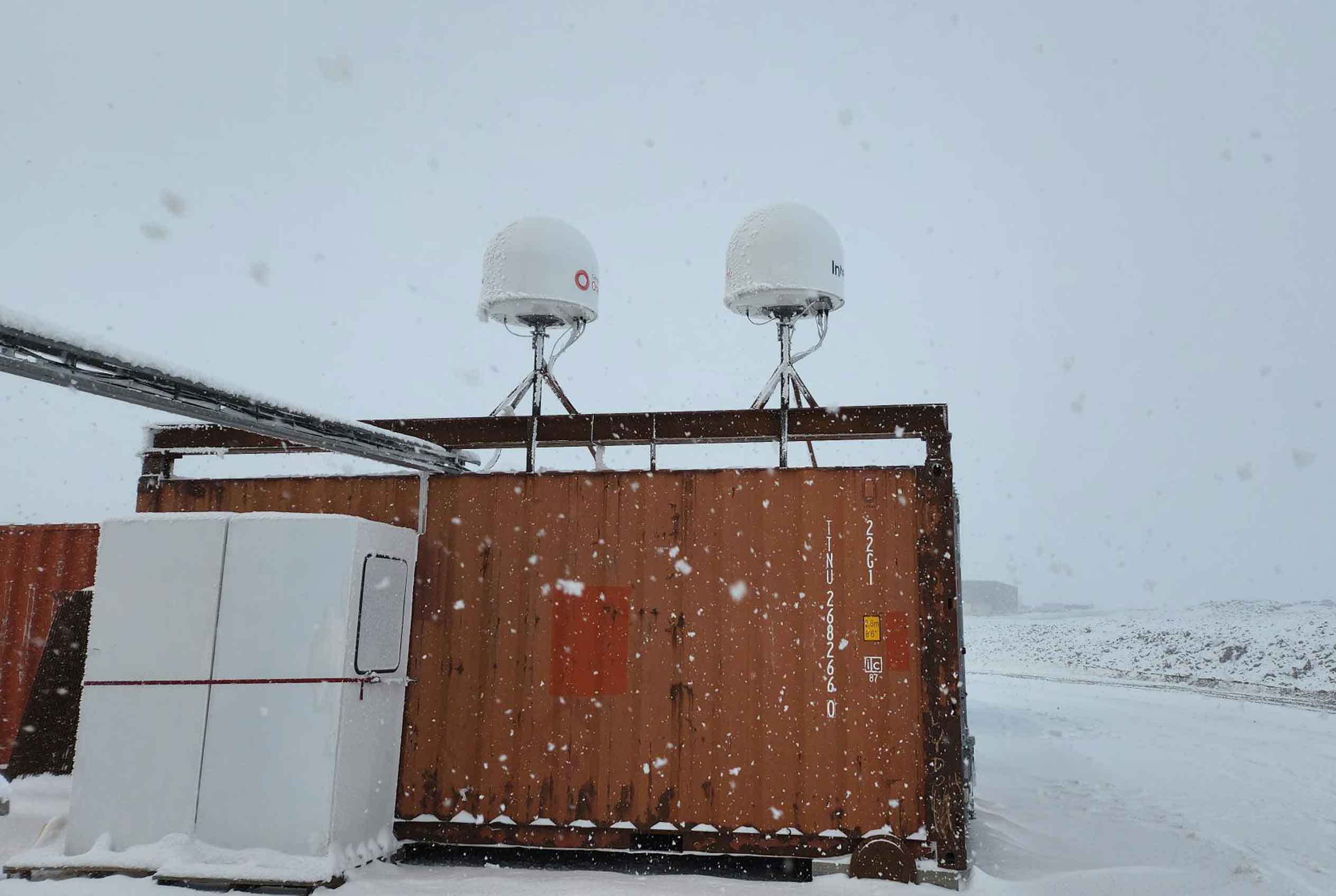
To manage these uplinks at remote sites, professional integrators deploy FortiGate firewalls using SD-WAN. They isolate the camera network completely from the facility’s operational technology (OT) network. The SD-WAN engine intelligently routes traffic across multiple satellite links. A robust industrial deployment aggregates Starlink and OneWeb Low Earth Orbit (LEO) constellations. Starlink handles high-bandwidth bulk data. OneWeb provides a highly stable connection for critical alerts. The firewall forces security alerts to the front of the queue, guaranteeing delivery.
Canadian Privacy Laws and Biometric Governance
Running an AI video surveillance system with facial recognition requires strict adherence to Canadian data privacy laws. Operating without data governance exposes you to severe regulatory penalties. Commercial entities must strictly follow the Personal Information Protection and Electronic Documents Act (PIPEDA) and provincial laws like Quebec’s Law 25.
The Office of the Privacy Commissioner of Canada (OPC) classifies the facial geometric templates generated by AI cameras as highly sensitive biometric data. Organizations must implement strict data governance:
- Explicit Notice: Commercial operators must install highly visible signage at all facility perimeters warning individuals that AI-enhanced facial recognition and audio recording systems are active.
- Data Minimization: The system must automatically purge raw video footage after a justifiable operational period. The system must permanently delete biometric templates the moment an employee terminates their contract.
- Cryptographic Safeguards: NVR RAID arrays require AES-256 encryption at rest. All network data requires TLS encryption.
Industrial Scenarios Driving AI ROI
Construction Site Security Camera System
The Canadian construction sector loses $46 million in equipment annually to organized theft. The recovery rate sits at 21%. A construction site security camera system powered by AI stops the theft before the equipment moves.
Integrators mount robust PoE security camera system 4K units (like the UniFi G5 Pro) on poles to watch expansive, unlit perimeters using long-range IR. When opportunistic thieves breach the line after hours, the system reacts. A UniFi G4 Spotlight activates a blinding 2000-lumen white-light LED strobe. The camera triggers a pre-recorded, two-way audio warning. This sequence completes in two seconds. It shatters the psychological momentum of the trespasser.
Critical Infrastructure Security Cameras
Energy substations, municipal water facilities, and hundreds of kilometers of transmission pipelines require specialized critical infrastructure security cameras. Regulatory frameworks like NERC CIP mandate continuous, verifiable perimeter security.
Human patrols cannot monitor these massive corridors effectively. By deploying a perimeter detection camera system, operators build virtual defensive walls along the entire right-of-way. Any AI-verified detection of a human or vehicle generates an immediate, high-priority alarm. This produces the exact, timestamped audit trails regulatory authorities demand.
Warehouse Security Camera System with AI
Distribution centers demand a warehouse security camera system with AI that blends security operations with logistical intelligence. During peak hours, an AI object detection security camera network monitors the facility for health and safety compliance. The algorithms ensure personnel wear required personal protective equipment like hard hats.
LPR systems automate gate access. They recognize approved transport manifests to eliminate manual guard check-ins. When the shift ends, the entire network instantly switches its AI profiles to strict intrusion detection, securing the logistics yard against cargo theft.
Hardware and Platform Architecture in 2026
Realizing these operational outcomes requires enterprise-grade hardware. The UniFi Protect platform provides license-free centralized orchestration.
- Core Routing: The UniFi Cloud Gateway Industrial runs in extreme temperatures from -30°C to +50°C. It delivers 10-Gigabit routing and features high-capacity PoE+++ (90W) ports. This powers edge switches, PTZ cameras, and LEO satellite dishes directly. Dual Nano SIM slots handle remote cellular failover.
- Optical Sensors: The UniFi G5 Pro integrates dedicated edge AI processing directly into the camera body. It features a 4K, 1/1.8″ sensor that captures substantially more light, suppressing video noise and holding sharp color detail in near-total darkness, meeting identification-grade resolution requirements.
- Autonomous Tracking: The UniFi G4 PTZ packs a 30x optical zoom to resolve identification-grade detail across hundreds of meters. When a fixed perimeter camera detects a breach, the G4 PTZ automatically slews to the exact alert zone. The AI engine locks onto the target and autonomously tracks their movements across the site while fixed cameras continue monitoring their zones.
The NTFS Deployment Methodology
State-of-the-art AI processors fail if the network engineering is flawed. A poorly installed 4K AI camera yields the exact same false-positive chaos as an old analog system. NTFS designs and installs AI security camera systems for industrial and remote environments.
NTFS engineers surveillance systems based on your exact site layout and operational risks. The deployment follows a strict four-phase methodology.
Phase 1: Threat Modeling and Site Assessment
NTFS conducts an exhaustive threat modeling exercise using detailed architectural site drawings. Engineers analyze the facility’s geometry to identify ingress points and map high-value asset zones. They evaluate power infrastructure and analyze line-of-sight for satellite dish placement.
Phase 2: The Three-Layer Architecture
NTFS designs camera coverage plans using a concentric, three-layer approach.
- The Outer Perimeter: Installers deploy long-range, IP67-rated optical sensors along the fenceline configured with inbound directional tripwires.
- Access Control Points: Every gate receives UniFi AI Theta LPR cameras optimized for harsh lighting, wired directly into automated gate relays.
- Inner Site & Asset Zones: High-value zones rely on UniFi AI 360 panoramic cameras to eliminate blind spots. AI PTZ Precision units mount on high-elevation masts to track intruders.
Phase 3: Infrastructure Hardening
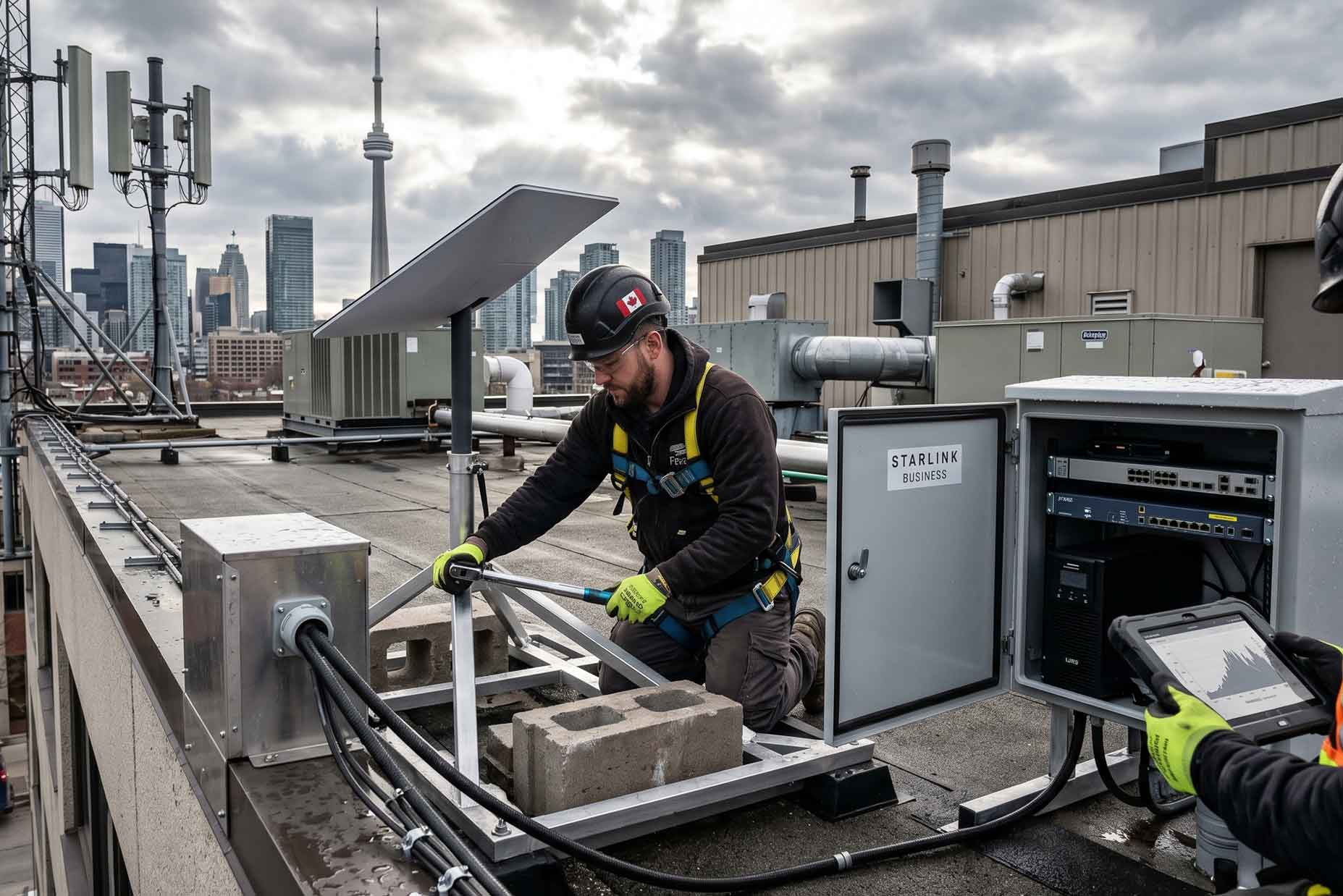
NTFS installs industrial-grade cameras using structured cabling built for direct burial and extreme UV exposure. For remote grids, engineers install pure sine wave Uninterruptible Power Supplies (UPS) and Lithium-Iron-Phosphate battery banks. Network engineers deploy FortiGate firewalls and build the strict VLAN isolation required to protect your OT network.
Phase 4: Precision AI Calibration
During the initial 72-hour operational window, the system can be manually fine-tuned in the local processing engines. Precise polygonal intelligent motion zones can be drawn. They mask out environmental triggers like steam venting from exhaust stacks. They dial in the exact sensitivity thresholds and populate the LPR databases.
Contact NTFS for a remote site security camera system assessment.