Passive video surveillance only records history. Active systems change the outcome. Modern sites need an AI security camera system that spots threats instantly.
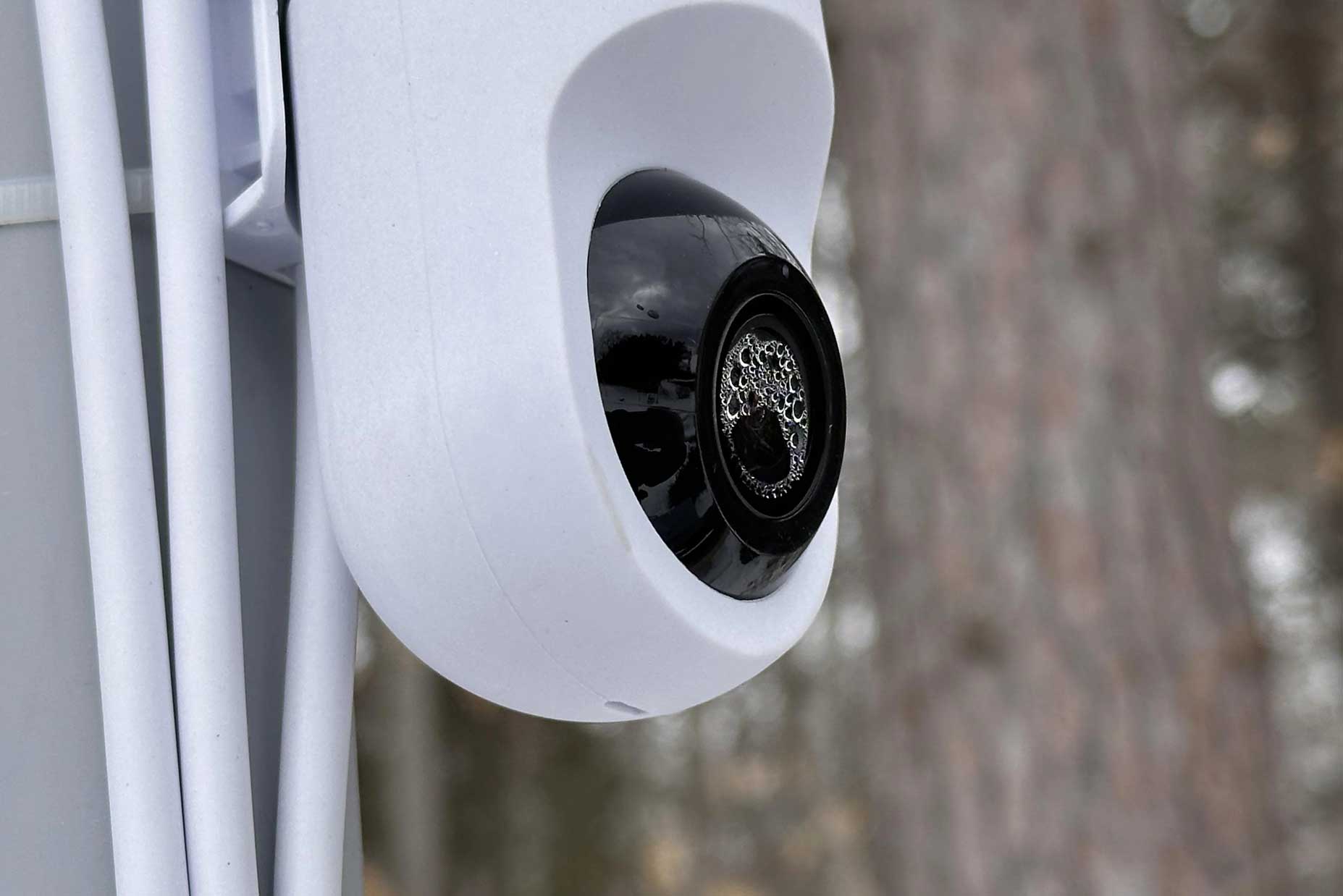
The UniFi G5 Pro outdoor security camera acts as the edge sensor for this network. It feeds optical data into local processing engines. We use it to catch movement the second a boot hits the gravel.
A bare camera cannot do this alone. Bolt a naked G5 Pro to a pole in a remote work camp. The winter will kill the hardware within days. A camera remains just a piece of glass until you connect it.
Modern AI security systems operate as full platforms. They demand a tight integration of cameras, local network hardware, and resilient satellite uplinks. As a specialized installer, NTFS engineers and deploys these networks using Ubiquiti hardware, customized to survive the most extreme Canadian environments.
What Is the UniFi G5 Pro Outdoor Security Camera?
A heavy aluminum alloy chassis houses a large 1/2-inch 8-megapixel sensor. This is the hardware core of the device. It grabs true 4K resolution video at 30 frames per second. High pixel density solves a distinct operational problem. You need to read a faded serial number on a skid steer from fifty yards away. Consumer cameras turn that digital zoom into a useless blur. The G5 Pro holds the edge detail intact.
The device uses a motorized varifocal lens. This provides a 3x optical zoom. The zoom lets you frame a target perfectly without sacrificing pixel count. A guard looks through the gatehouse window out into the heavy equipment yard. The camera cuts through that dark space. The f/1.53 aperture pulls sharp detail out of deep dusk.
Night vision relies on an infrared LED array. The base unit throws a beam 25 meters deep. You can buy the Vision Enhancer to extend this range. This proprietary module snaps onto the camera body. It pushes the infrared range out to 40 meters. It houses a 600-lumen white-light floodlight. The system uses this light to capture color night video. It triggers the exact same light as a blinding strobe to scare off intruders.
| Specification | UniFi G5 Pro Native Hardware | Industrial Reality |
| Sensor | 1/1.8″ 8MP 4K sensor for identification-grade resolution. | Delivers clarity for vehicle tags and facial recognition. |
| Lens | Varifocal 4.1–12.3 mm | Dial in exact fields of view without digital crop. |
| Night Vision | 25m IR Base, 40m Enhancer | Illuminates standard perimeters. |
| Power | PoE+ (802.3at) with peak draws up to 30W when integrated into the full industrial configuration. | Runs easily on solar battery skids. |
Is the UniFi G5 Pro Good for Industrial Use?
Look past the outer perimeter fence.
- A shift worker walks out of a restricted zone with a pneumatic drill.
- A teenager climbs a half-built scaffold.
- A black bear wanders near the main generator block.
These specific threats break standard AI logic.
Traditional pixel-motion alerts ring your phone every time it snows. The wind shakes a tree branch. A shadow moves across the gravel. The camera flags an emergency. You learn to ignore the alerts entirely. Alarm fatigue sets in. The million-dollar network becomes useless because humans stop trusting the notifications.
The G5 Pro kills this noise. It operates as a commercial security camera system AI device. It classifies objects before sounding an alarm. A flapping blue tarp means nothing. A human silhouette crossing the laydown yard triggers a verified alert. The system separates the arrival of a massive transport truck from the movement of a small utility task vehicle. It knows the exact difference between a coyote and a trespasser.
Does UniFi G5 Pro Work in -40 Degree Weather?
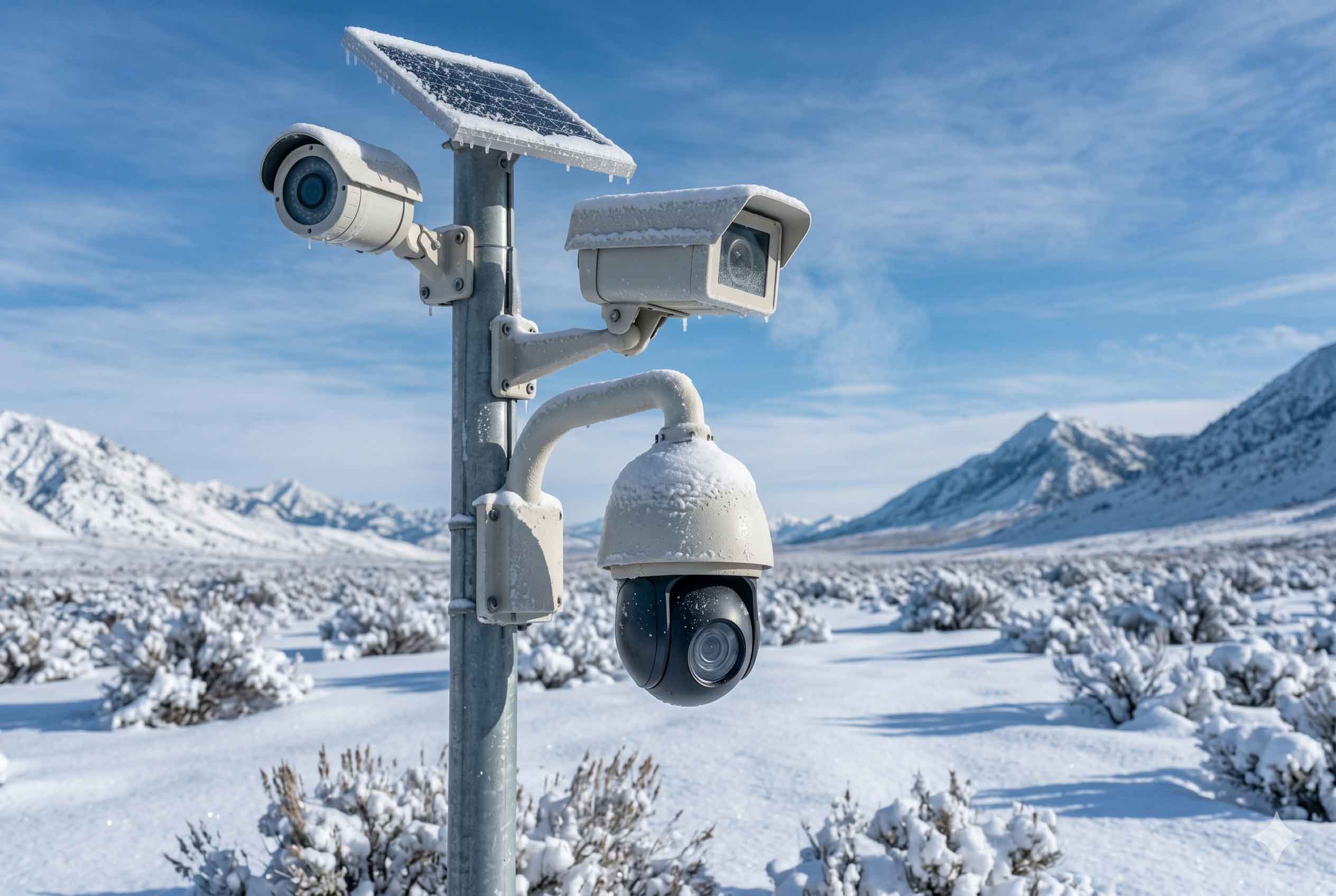
No. The engineering sheet promises safe operation down to -20°C. Below that mark, physics takes over. The optical motor grease freezes solid. The zoom mechanism seizes. Internal LCD components crack. Fast temperature shifts at dawn cause internal condensation. Frost ruins the lens. A bare camera fails fast in the northern oil sands.
We change the rules. We built a security camera for a cold weather extreme temperature setup. NTFS hardens the deployment by housing the G5 Pro inside a thermostatically controlled heated junction box. This heavy-duty polycarbonate shell features a 65-watt internal heater matrix.
Heavy snow piles up against the window of the command center. Outside, the temperature drops to -51°C. Inside the enclosure, the heater clicks on automatically at 40°F. The internal air stays warm and dry. Dual redundant blowers circulate the hot air across the front dome bubble. The optical path remains perfectly clear. The blowers melt the ice on contact. This engineered pairing creates a true IP67 IK10 security camera outdoor asset.
How Do Multi-Modal AI and Active Deterrence Change Industrial Security Outcomes?
Industrial incident investigation requires deep context. The G5 Pro captures high-fidelity audio alongside the 4K video feed. The system correlates an optical alert with acoustic data. The sound of breaking glass signals a breach. The heavy grinding of metal indicates forced entry. The rumble of an unauthorized diesel engine starting after hours demands immediate attention. Audio data proves intent.
The device acts as the trigger for an active security camera intrusion detection system. It reads the frame in real time. We map specific polygons on your architectural site plans. We create smart detection zones. We link the G5 Pro to a UniFi G4 Spotlight.
The camera spots an intruder entering the restricted zone. The software signals the light. The spotlight hits the target with 2000 lumens. The camera speaker barks a pre-recorded audio warning. You force the intruder to retreat, which buys time for the physical response team.
Can AI Security Cameras Work Without the Internet?
Cloud cameras present a severe operational liability. They require a massive data pipe to send raw video to a remote server. That remote server does the actual thinking. Cut the fiber line. The cloud system goes blind. It stops recording. It stops detecting.
The UniFi Protect platform runs entirely on site. NVR AI analytics local processing keeps the lights on. The camera talks directly to the local UniFi Network Video Recorder. The dual-core processor on the G5 Pro handles the first stage of AI object detection. And the heavy data storage runs on your local encrypted RAID array.
Sun glares off the dusty gravel lot outside the admin shack window. A careless backhoe operator snaps the main internet trunk beneath that gravel. The G5 Pro still watches the gate. It still records 4K video. It still fires spotlights and audio warnings. The internet connection only exists to send the thumbnail alert to your phone. The system never relies on the cloud to secure the site.
What Is the Best Outdoor Security Camera for Remote Site Infrastructure?
Remote operations fight for bandwidth. Security data competes with VoIP phone calls. It fights against the crew downloading movies in the barracks. We fix this network congestion with Fortinet FortiGate firewalls. We build strict SD-WAN traffic shaping rules.
We place the cameras on an isolated VLAN. Security alerts get absolute priority over all other site traffic. The firewall chokes the crew network. The AI alert leaves the site instantly. We integrate dual satellite paths to build a highly available wide area network.
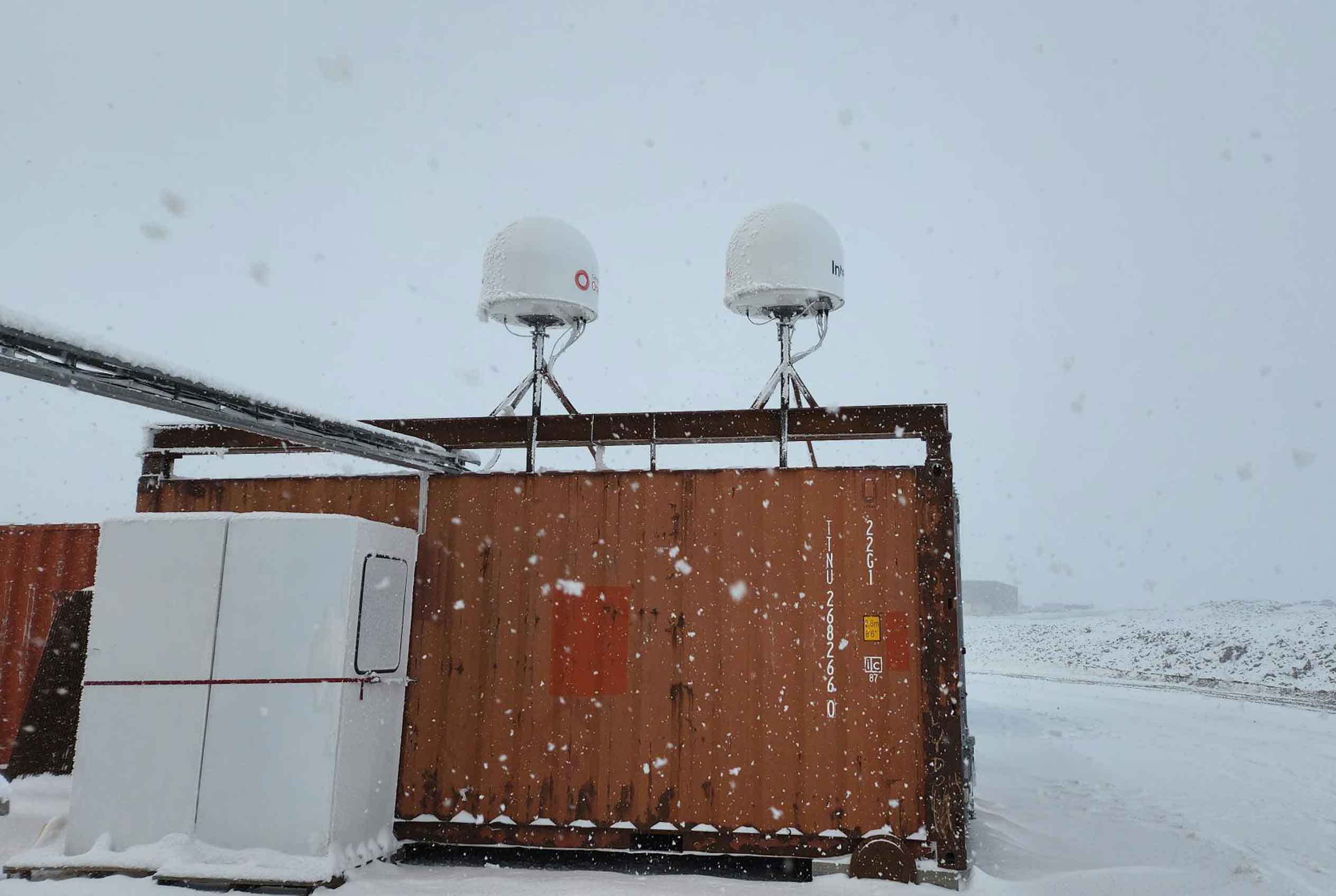
- OneWeb Enterprise: Guarantees the connection via strict Service Level Agreements. It provides a Committed Information Rate. The bandwidth never drops. We use this strictly for lightweight AI alerts.
- Starlink High Performance: Delivers massive bulk data throughput. It operates on best-effort routing. It lacks guaranteed minimums.
We send the tiny AI alert over the rock-solid OneWeb link. A remote operator sees the alert. They request the heavy 4K video feed to investigate. The firewall detects the heavy traffic. It automatically streams the live video over Starlink. Dual LEO diversity keeps the site online through severe storms.
Where does the G5 Pro Fit in an Industrial Security System?
Do not use one camera model for everything. A single focal length creates massive blind spots across a complex facility. Industrial security requires layered architecture.
The Outer Perimeter
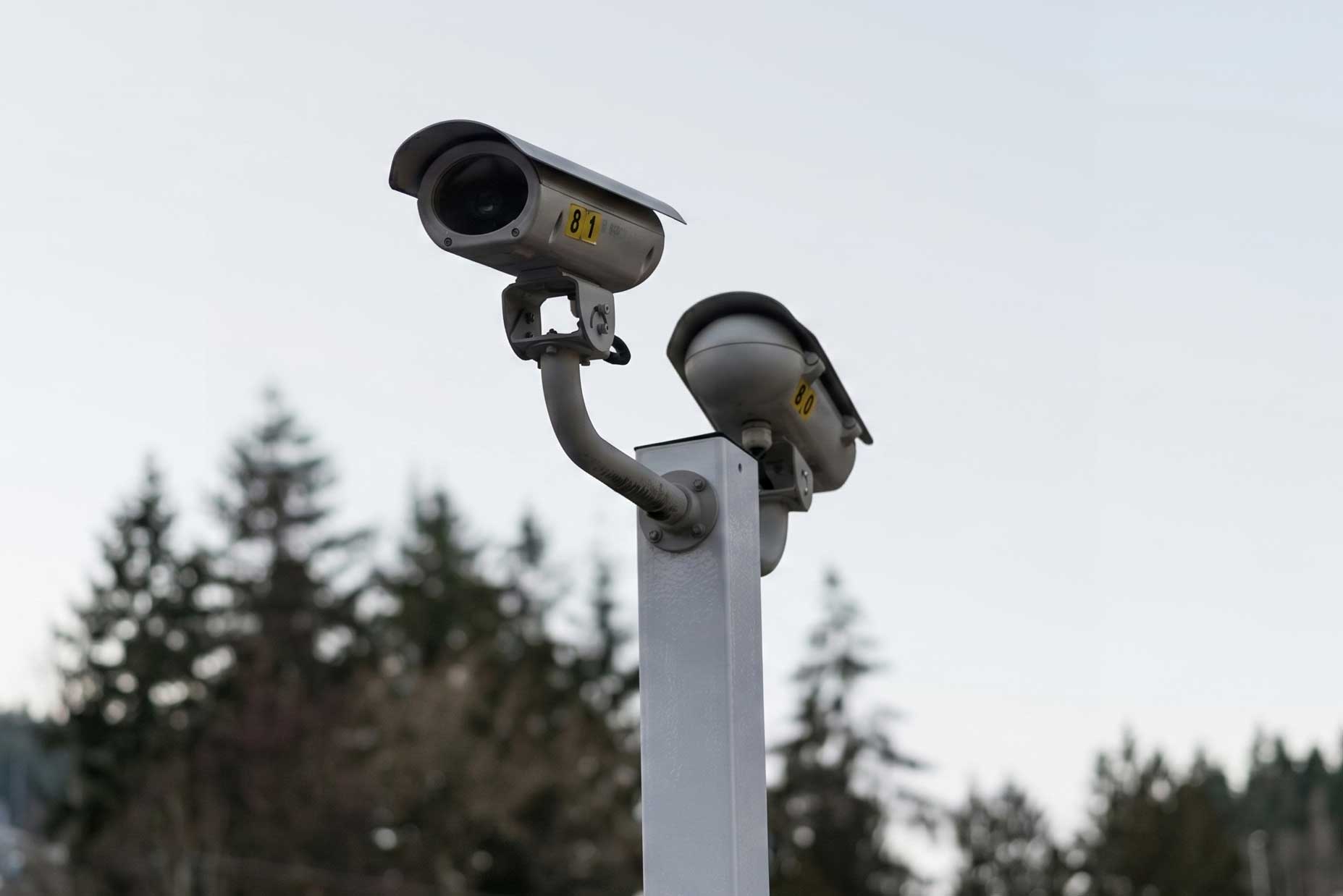
We secure the fenceline with the UniFi G4 Pro. It features a larger sensor. It sees much further in the dark. We set virtual tripwires. We catch inbound movement long before the target reaches the buildings.
Access Control Points
NTFS deploys a layered approach at access points: the G5 Pro provides situational context and pedestrian tracking, while a dedicated UniFi AI Theta captures license plates. It uses infrared wavelengths tuned specifically for plate reflectivity, ensuring the system isn’t blinded by vehicle headlights at night.
Inner-Site Zones
The G5 Pro dominates the inner yard. Mount it eight meters high on a galvanized pole. Point it at the fuel storage tanks. Pair it with a UniFi G4 PTZ camera.
Exhaust fumes rise past the generator room window. The camera above it sees the whole grid. The fixed G5 Pro detects a person. It commands the central PTZ camera to slew to those exact coordinates. The PTZ engages its 30x optical zoom. It tracks the person dynamically across the yard. The G5 Pro never stops watching the original point of entry.
Pros and Limitations of the G5 Pro
We evaluate hardware based entirely on physical capability. We expose the operational limits.
The Strengths
- Forensic optical zoom catches deep detail. You avoid the blur of digital cropping.
- The PoE security camera system outdoor industrial setup requires just one shielded Cat6 cable. It delivers power and gigabit data.
- License-free edge AI processing security camera features save money. You avoid expensive legacy software subscriptions.
The Weaknesses
- You lock your operation into the UniFi Protect hardware ecosystem. The camera refuses to write to a generic third-party NAS drive easily.
- The native IP65 housing dies under a direct hit from a high-pressure washdown. Corrosive chemical environments eat the exposed aluminum.
- Bad mounting geometry breaks the neural network. Mount it too high. The AI sees the top of a head instead of a face. The classification fails.
How NTFS Designs and Installs UniFi G5 Pro Systems
We do not guess. We do not rely on generic templates. Every deployment demands rigorous engineering. We use your actual site drawings to model field-of-view (FOV) polygons, guaranteeing a minimum 20% overlap between cameras and ensuring no critical asset is more than 30 meters from identification-grade resolution.
Phase 1: Threat Modeling
We take your CAD drawings and architectural plan views. We map the primary ingress points. We locate the high-value asset storage zones. We build the system to cover these exact weak points.
Phase 2: FOV Math
We mathematically model the Field of View polygons. We calculate the required pixels per foot at target distances. We guarantee a minimum 20% FOV overlap between adjacent cameras. This kills operational blind spots entirely.
Phase 3: Hardened Infrastructure
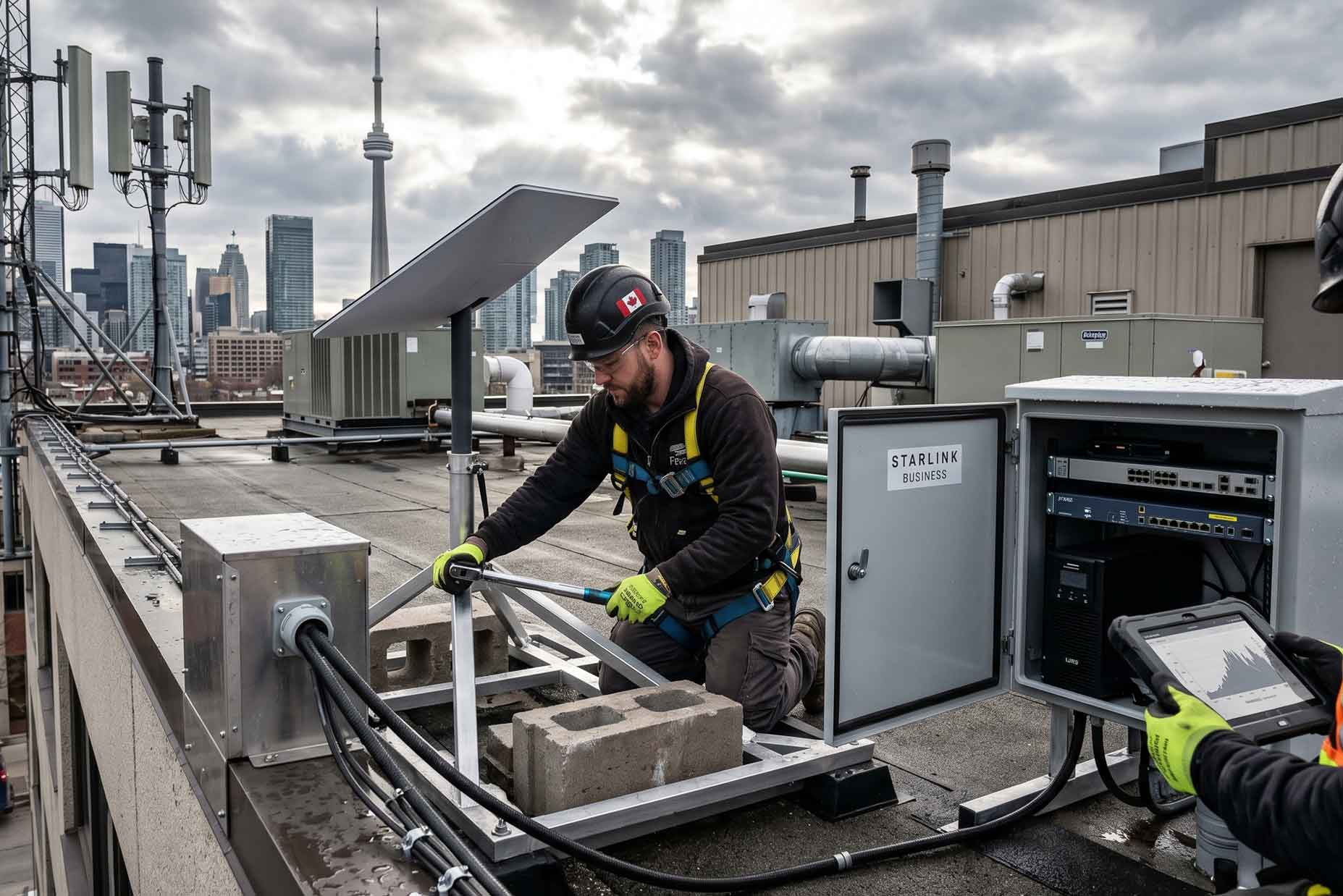
We build the physical backbone. We specify the NEMA-rated weatherproof switch enclosures. We pull burial-rated fiber optic trunks across the site. We size pure sine wave UPS backups. These survive dirty generator power spikes.
Phase 4: Network Isolation
We lock down the system. The Fortinet firewalls isolate the surveillance traffic from the general operations network. We establish the secure VPN tunnels back to your central command center.
Phase 5: AI Calibration
We mandate a 72-hour burn-in period. We force the system to learn the environment. A worker watches dust swirl in the sodium lamp outside the site trailer window. The camera learns to ignore the dust. We mask out the moving safety flags. We populate the authorized license plate databases. We script the exact spotlight triggers.
The G5 Pro acts as a highly capable edge AI processing security camera. On its own, it remains just glass, plastic, and silicon. Left exposed to a harsh winter or choked by a bad network, the hardware fails. Build it into a hardened, local-first platform. It locks down the site autonomously.
Stop paying for useless motion alerts. Stop tolerating operational blind spots. NTFS designs and installs UniFi G5 Pro camera systems for industrial and remote environments. We engineer camera placement based entirely on your specific site layout. Contact NTFS to evaluate if the G5 Pro fits your deployment. We will build a perimeter that actually works.