A practical guide to industrial satellite deployment, from site survey to go-live, for agriculture, construction, government, and remote operations.
If your operation sits outside the reach of fibre, cable, or reliable LTE, you have been making do with connectivity that was never designed for how you work. Starlink is changing that calculation for Canadian businesses in agriculture, construction, mining, logistics, and government field operations. This guide breaks down what enterprise deployment actually looks like, what it costs, and what to expect from the installation process.
WHAT IS STARLINK AND WHY DOES IT MATTER FOR BUSINESS?
Starlink is a Low Earth Orbit (LEO) satellite internet network operated by SpaceX, with over 6,000 satellites in continuous orbit at approximately 550 kilometres altitude. That proximity to Earth is what separates it from legacy geostationary satellite systems, which sit at 35,000 kilometres and deliver the high latency that made satellite internet impractical for real-time business applications.
For Canadian businesses, the performance difference is significant. Starlink delivers typical download speeds of 100 to 250 Mbps with latency as low as 20 to 40 milliseconds, making it viable for video conferencing, cloud-based platforms, SCADA systems, remote monitoring, and large file transfers. These are not consumer use cases. They are the daily operational requirements of industrial Canada.
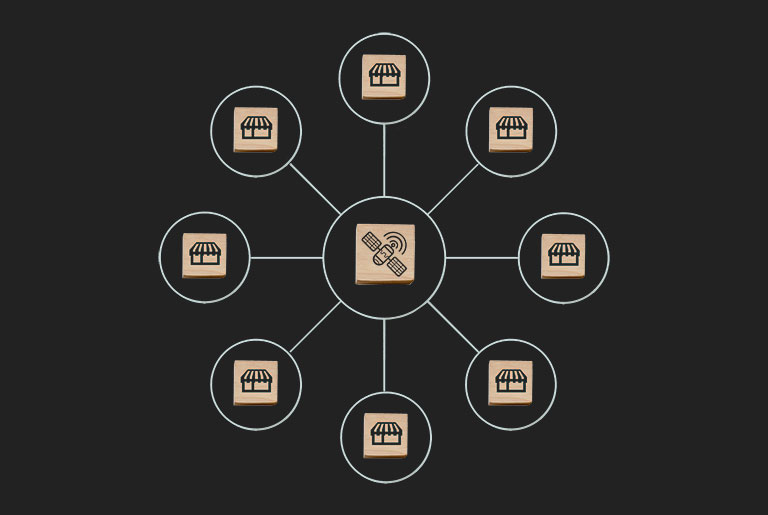
The core hardware for business deployments is the Starlink High-Performance Flat-Panel Terminal, a compact, weather-resistant antenna that self-orients to acquire signal without manual pointing. Paired with the Starlink Business Hub for high-bandwidth environments, the system is scalable from a single remote office to a multi-site enterprise deployment.
READY TO ASSESS YOUR SITE?
To get your Starlink service set up with ease, trust NTFS for expert installation and support.
THE STARLINK INSTALLATION PROCESS IN CANADA
A proper Starlink installation guide for Canada starts well before anyone picks up a drill. The conditions that make satellite internet necessary in the first place, remote locations, extreme weather, complex infrastructure, are the same conditions that make installation more demanding. This is not a self-install scenario for enterprise clients.
01
SITE SURVEY AND SKY OBSTRUCTION ANALYSIS
02
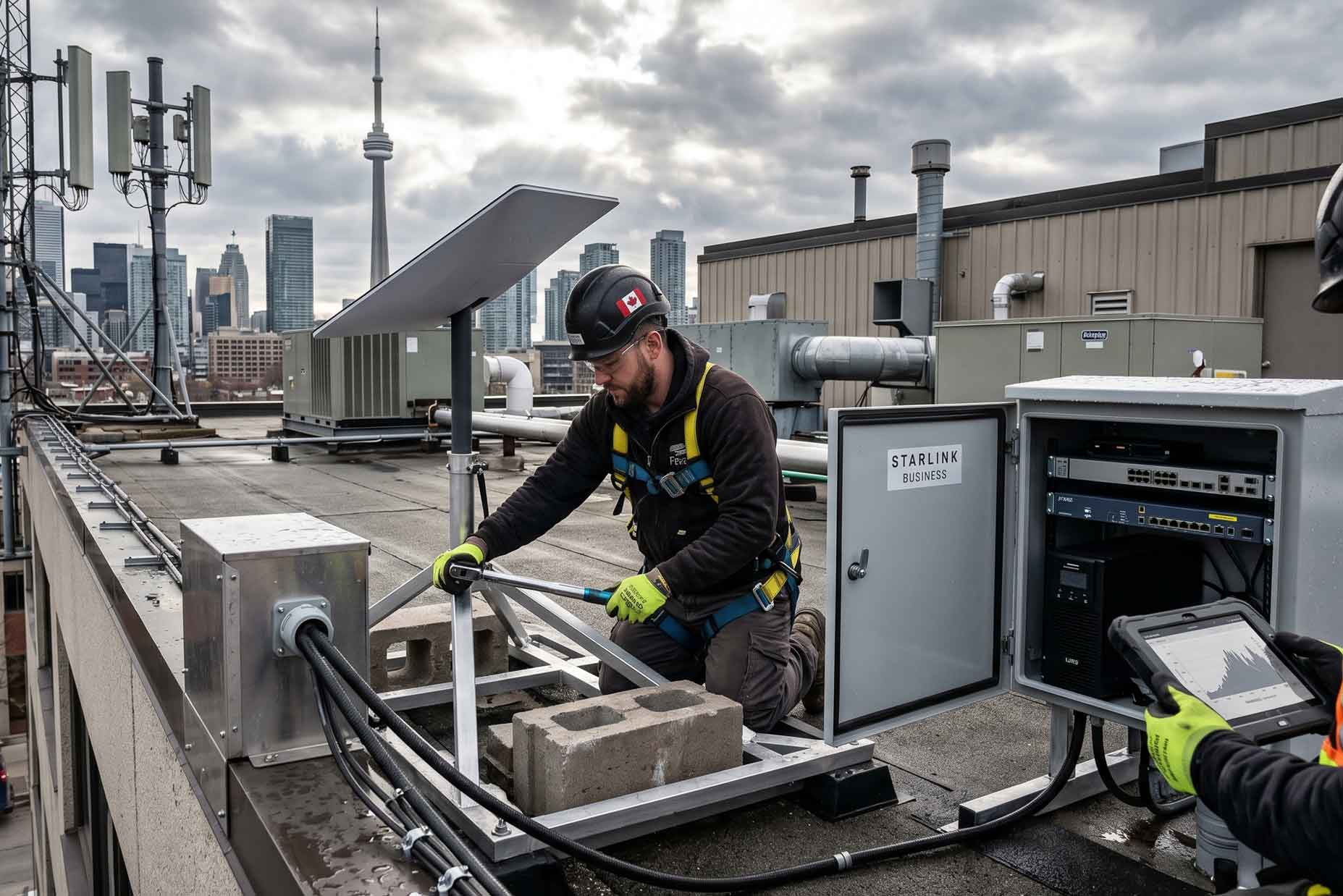
MOUNT SELECTION AND STRUCTURAL ASSESSMENT
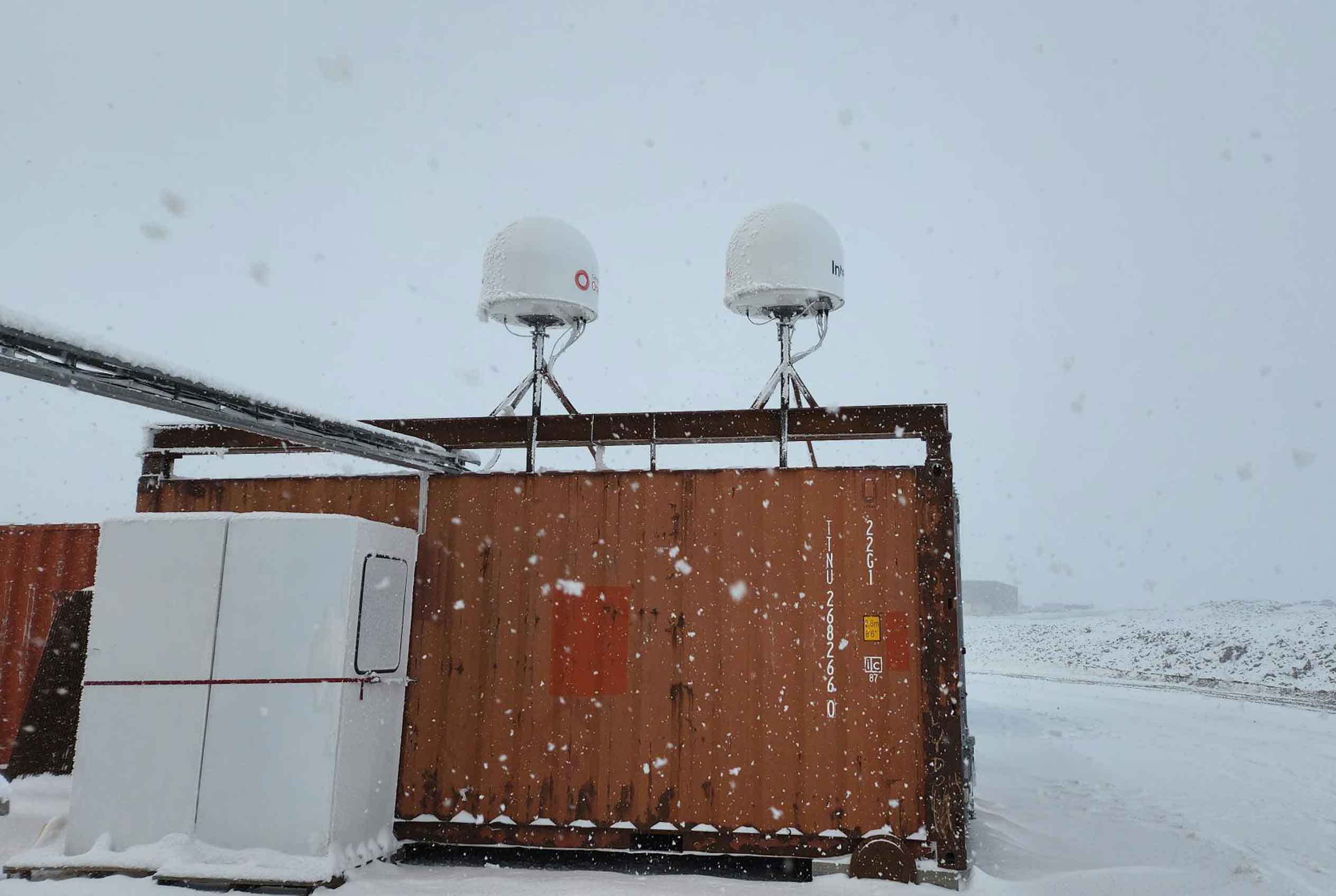
Options include rooftop mounts, pole mounts, mast installations, and temporary parabolic setups for construction sites or pop-up locations. Each application requires a different structural approach, particularly in environments subject to heavy snow loads, ice accumulation, or high-wind exposure common across Alberta and Northern Canada.
03
CABLING, WEATHERPROOFING, AND COLD-CLIMATE COMPLIANCE
All cable runs are sealed, protected, and rated for Canadian temperature ranges. In northern deployments, heat tape and insulated enclosures for networking equipment are standard practice, not optional extras.
04
NETWORK INTEGRATION AND TESTING
The terminal is configured and integrated with existing LAN or WAN infrastructure, and tested under load. VLAN segmentation, failover configurations, and firewall settings are handled during this phase for enterprise clients with specific network security requirements
05
HANDOVER DOCUMENTATION AND STAFF ORIENTATION
NTFS provides complete as-built documentation, network diagrams, and a client-facing orientation on system monitoring and basic troubleshooting. Nothing leaves a site undocumented.
INDUSTRY-SPECIFIC APPLICATIONS
Starlink’s performance profile makes it viable across a wide range of industrial sectors. The following represent the highest-impact applications NTFS has deployed across Canada.
Agriculture
SATELLITE INTERNET FOR AGRICULTURE
Construction
SATELLITE INTERNET FOR CONSTRUCTION
Satellite internet for construction keeps off-grid job sites connected for project management platforms, safety communications, equipment telematics, and crew welfare. Temporary parabolic antenna setups deploy in hours and relocate as the project moves.
Remote Offices
SATELLITE COMMUNICATION FOR REMOTE OFFICES
Satellite communication for remote offices provides the throughput needed for cloud applications, VoIP, video conferencing, and secure VPN access. Camp and lodge operations in Northern Canada rely on this for both operational continuity and crew connectivity.
Government
GOVERNMENT AND PUBLIC SECTOR
NTFS has completed RV and trailer satellite installations for Government of Canada field operations, providing reliable connectivity for mobile teams and temporary deployment sites across remote regions.
MOBILE AND TEMPORARY DEPLOYMENTS
RV and Trailer Deployments: NTFS has hands-on experience deploying Starlink on government trailers and mobile command units. The Starlink RV Mounting Kit provides a low-profile, secure installation that maintains signal quality on stationary deployments at remote sites. This is the standard configuration for temporary field offices, disaster response units, and seasonal operations across Alberta and Northern Canada.
Temporary Site Installations: Starlink’s parabolic antenna options are purpose-built for construction camps, agricultural seasonal sites, and pop-up remote offices. Setup time is measured in hours. Teardown and relocation require no specialized tooling.
NTFS GOVERNMENT DEPLOYMENT PROGRAM
NTFS completed RV and trailer satellite deployments for Government of Canada field operations, providing mobile teams with enterprise-grade connectivity in locations where no other service was available.
MOBILE DEPLOYMENT INQUIRY
To get your Starlink service set up with ease, trust NTFS for expert installation and support.
STARLINK FOR BUSINESS: COSTS AND ROI
Cost transparency matters for procurement decisions. The following represents typical ranges for business satellite internet deployments in Canada. Exact pricing varies based on site complexity, mount type, cable run distance, and climate considerations. NTFS provides itemized quotes following a site assessment.
Component | Typical Range | Notes |
|---|---|---|
Starlink Business Hardware | $2,500 to $3,500 CAD | High-Performance Flat-Panel Terminal, router, cables |
Professional Installation | $800 to $2,500 CAD | Varies by mount type, site complexity, and location |
Starlink Business Service | $250 to $500+ CAD/month | Priority data access, higher throughput tiers available |
Starlink Business Hub | Additional hardware cost | Required for multi-user, high-bandwidth enterprise environments |
Northern and Remote Premium | Site-specific | Reflects travel, cold-climate materials, and extended cable runs |
The ROI framing for remote operations is straightforward. A remote site with no reliable internet creates measurable operational drag through delayed reporting, safety communication gaps, equipment downtime, and crew turnover. The monthly cost of Starlink Business is typically a fraction of the cost of one day of operational disruption on an industrial site. For enterprise satellite internet solutions in Canada, Starlink represents the best performance-to-cost ratio currently available.
WHY NTFS FOR YOUR STARLINK INSTALLATION
There is a significant difference between a certified installation partner and a box-drop reseller. NTFS is the former. Our teams operate coast to coast, from Atlantic Canada through to British Columbia, north into Yukon, the Northwest Territories, and Nunavut, and south to the Canada-US and Canada-Alaska borders.
- Proven enterprise and government deployment experience, including Government of Canada mobile and trailer installations in demanding field environments.
- Cold-climate installation expertise across all Canadian climate zones, with materials and practices rated for actual Canadian conditions.
- Post-installation support and monitoring, because a Starlink terminal that goes offline at a remote site at 2 a.m. on a Friday is not a problem you want to troubleshoot alone.
- Complete handover documentation on every installation, including network diagrams, equipment specs, and escalation contacts.
- Tailored solutions for fixed, temporary, and mobile applications, with site assessments that identify the right hardware and mount configuration before any cost is committed.