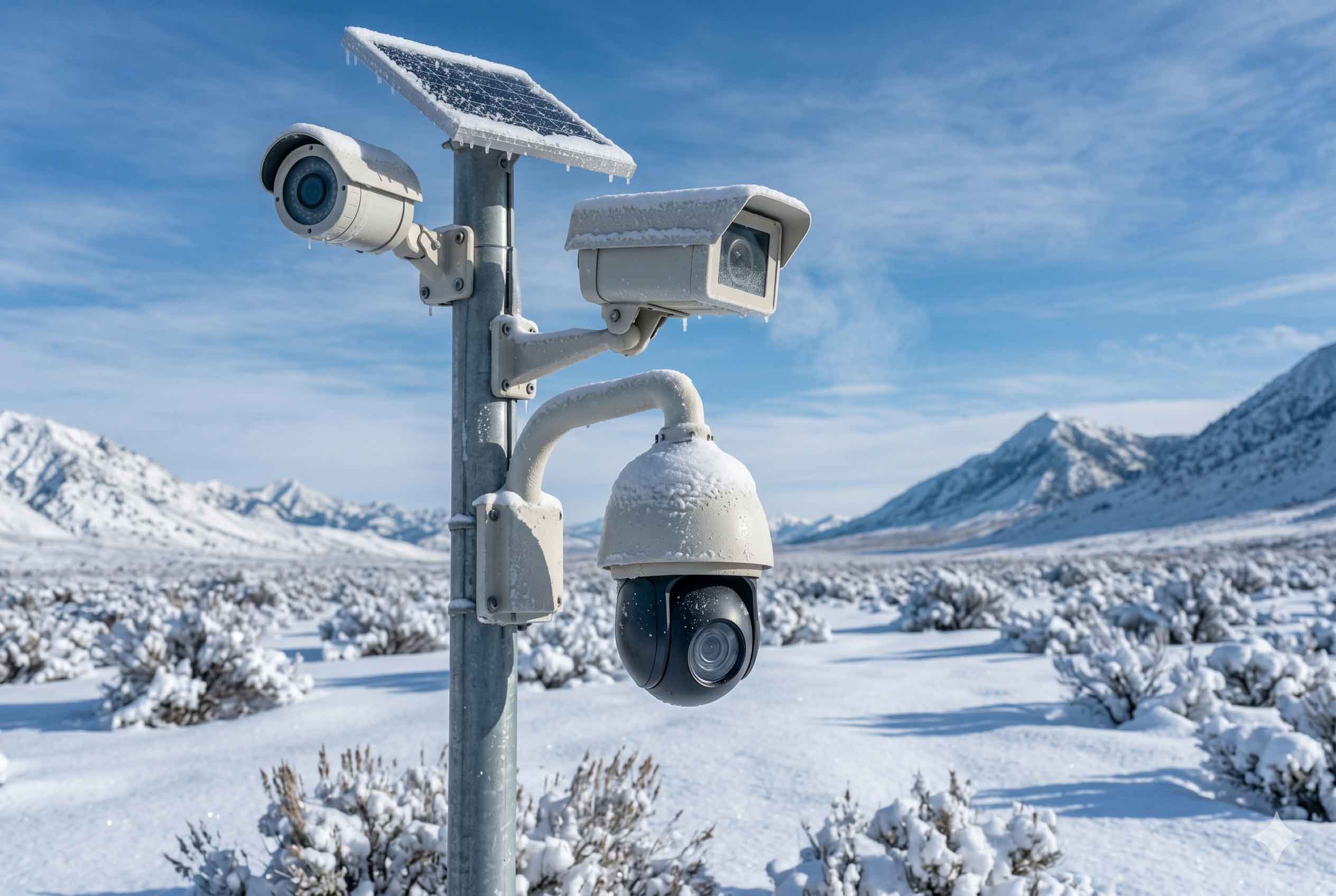
Most security cameras die in industrial environments. Procurement teams often buy consumer-grade hardware built for suburban driveways and deploy it at a remote mining camp.
Within a month the sensors freeze. Condensation ruins the image. A shared satellite link chokes on constant video streaming. The hardware fails because the environment demands a completely different architecture.
Designing a security camera system for harsh environments is an engineering problem. You are not dealing with reliable power grids or fiber-optic backbones. You are dealing with generators, extreme temperature swings, and isolation. A functional industrial security camera system needs edge computing, ruggedized enclosures, and local storage.
How Do Security Cameras Work in Harsh Environments?
Security cameras work in harsh environments by localizing intelligence. A standard system sends video to the cloud for processing. That fails when you only have a satellite uplink.
A proper commercial security camera system AI platform processes object classification, tripwire logic, and audio analytics directly on the hardware. This edge AI processing security camera architecture ensures the system continues detecting threats even when connectivity drops.
Connectivity is reserved exclusively for sending verified alert thumbnails and remote management traffic. The system sends a tiny fraction of the data a cloud camera needs.
What Is the Best Security Camera for Extreme Cold Weather?
Do security cameras work in -40 degree weather? Yes, but only with precise hardware combinations. The UniFi G5 Pro paired with a thermostatically controlled heated junction box is the correct specification.
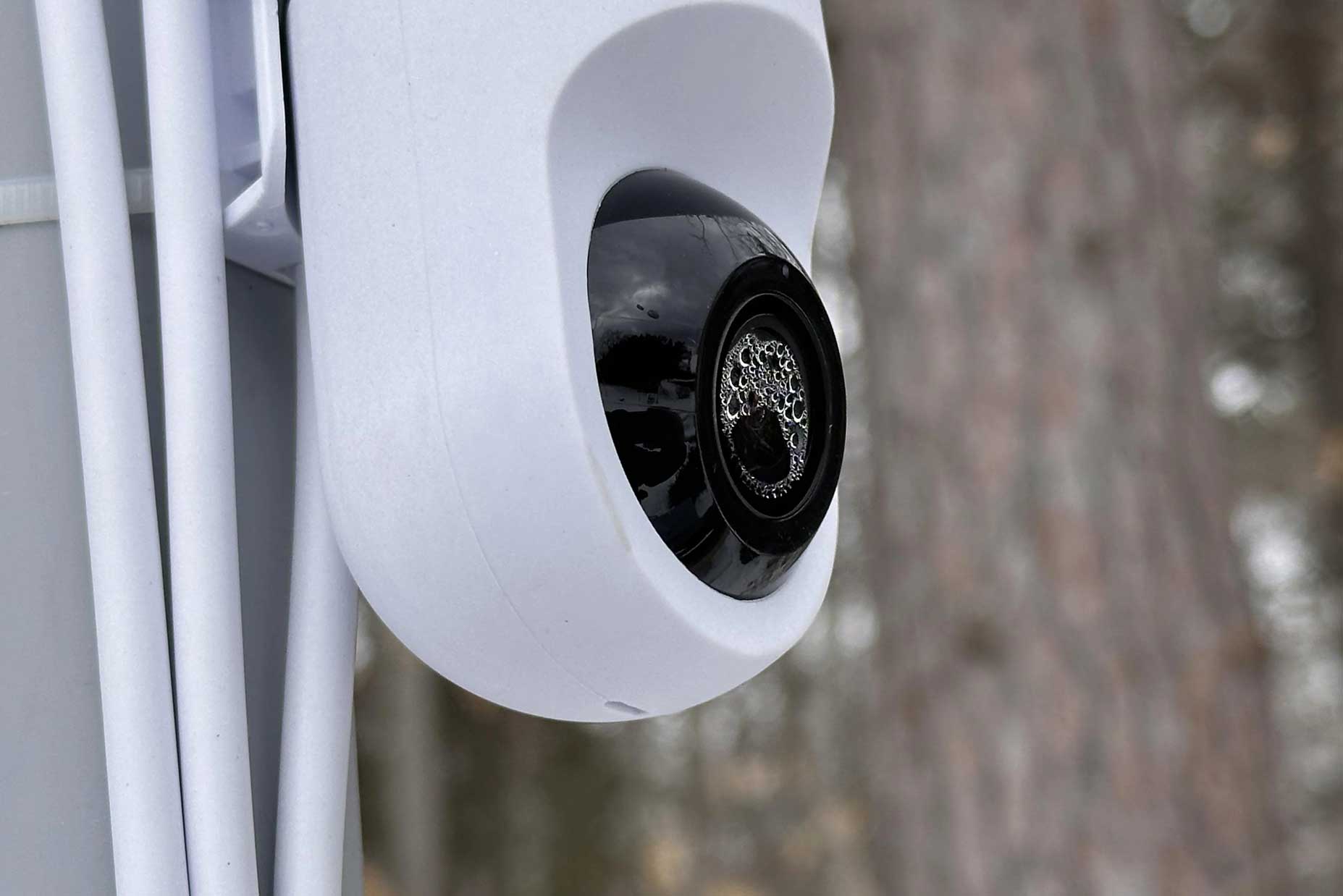
The base camera operates down to -25°C natively. Pushing it to -40°C requires the heated enclosure to maintain the internal body temperature within operational limits. The heater also prevents frost accumulation on the infrared emitters. Without this heat source, cold weather causes lens condensation and mechanical failure.
This hardware combination is the foundation of our security camera cold weather extreme temperature deployments across northern Alberta and the territories.
What Does IP67 Mean for Security Cameras?
IP67 is a standardized rating describing how well a device resists solid particles and liquids. The “6” means the enclosure is completely dust-tight. The “7” means the camera can survive temporary submersion in water up to one meter deep.
An IP67 outdoor security camera system is non-negotiable for industrial sites. Remote environments subject hardware to heavy dust, driving rain, and severe freeze-thaw cycles.
Moisture ingress will short out a circuit board or fog a lens permanently. We set IP67 as the baseline for all exposed outdoor installations.
What Is IK10 Rating for Security Cameras?
IK10 is the highest standard rating for impact resistance. An IK10 rating means the camera housing can absorb a 20-joule physical impact without failing. That is roughly equivalent to dropping a five-kilogram weight from a height of 40 centimeters onto the device.
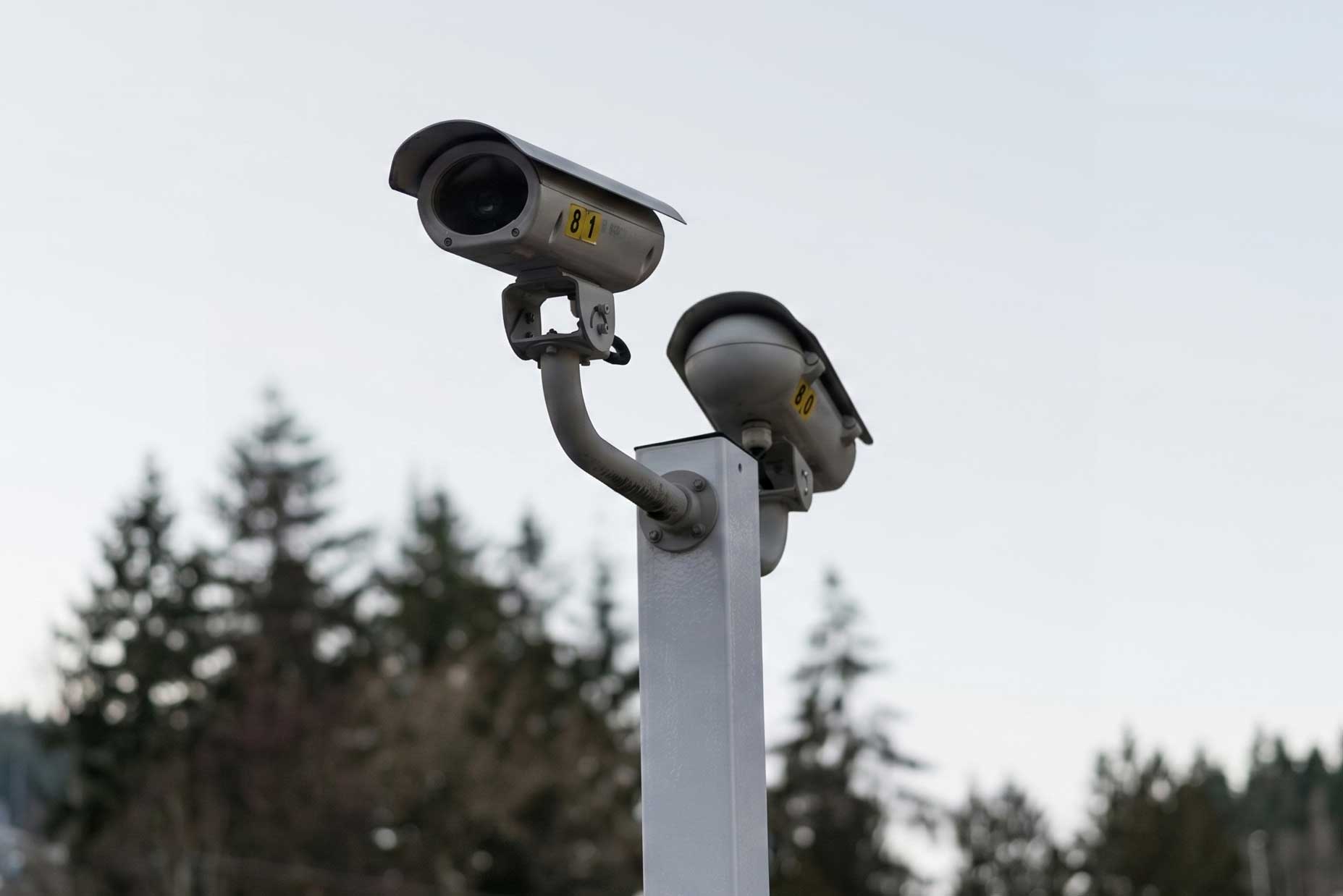
You need an IP67 IK10 security camera outdoor unit wherever equipment, flying debris, or vandalism are constant threats. Exposed perimeter cameras and those mounted near heavy machinery need this structural integrity to survive daily operations.
Why AI Matters in Industrial Environments
Traditional motion detection relies on pixel changes. If the lighting shifts or a tree branch sways, the camera generates an alert. In an outdoor industrial yard, falling snow or heavy rain triggers thousands of notifications. Alarm fatigue sets in. The system becomes useless because operators ignore it. Traditional motion alerts are false positives up to 98% of the time.
A security camera intrusion detection system with AI classification solves this. The NVR AI analytics local processing engine filters the noise. The software categorizes objects into distinct types.
- Person detection
- Vehicle classification
- Animal detection
- Package detection
When a deer crosses a fenceline, the system recognizes the animal and ignores it. When a human crosses that same line, the system triggers an alarm immediately. This classification reduces false alarms to below five percent.
Do Security Cameras Work Without Internet?
Yes. A correctly architected system does not need the internet to secure a site.
Cloud dependency is a fatal flaw for remote locations. If a cut fiber line or a satellite storm takes down the network, a cloud camera stops recording. Our deployments use an NVR AI analytics local processing model. Every classification, alert, and recording runs locally on the network video recorder.
If the satellite uplink drops, the system still detects intruders. It still triggers automated white-light spotlights and audio warnings. It still writes encrypted video to the local RAID drives. The internet connection exists only to notify operators off-site. The site remains secure regardless of the wide area network status.
Power Resilience for Remote Sites
The best security camera for harsh environment operations is useless without reliable power. A remote site power failure cannot blind the system.
We bridge the gap between primary power loss and backup generator activation with dedicated hardware. We specify pure sine wave uninterruptible power supplies providing at least four hours of full-system runtime. This window easily covers the typical 90-second generator start delay and handles longer planned maintenance periods.
A standard 30-camera deployment pulls about 1200 watts at peak load. A correctly sized lithium iron phosphate battery bank keeps the entire PoE security camera system outdoor industrial network running seamlessly.
Satellite Connectivity and Traffic Management
You cannot push continuous 4K video streams over a remote satellite link. The bandwidth does not exist. Standard cloud cameras consume between 50 and 200 megabits per second for a typical site.
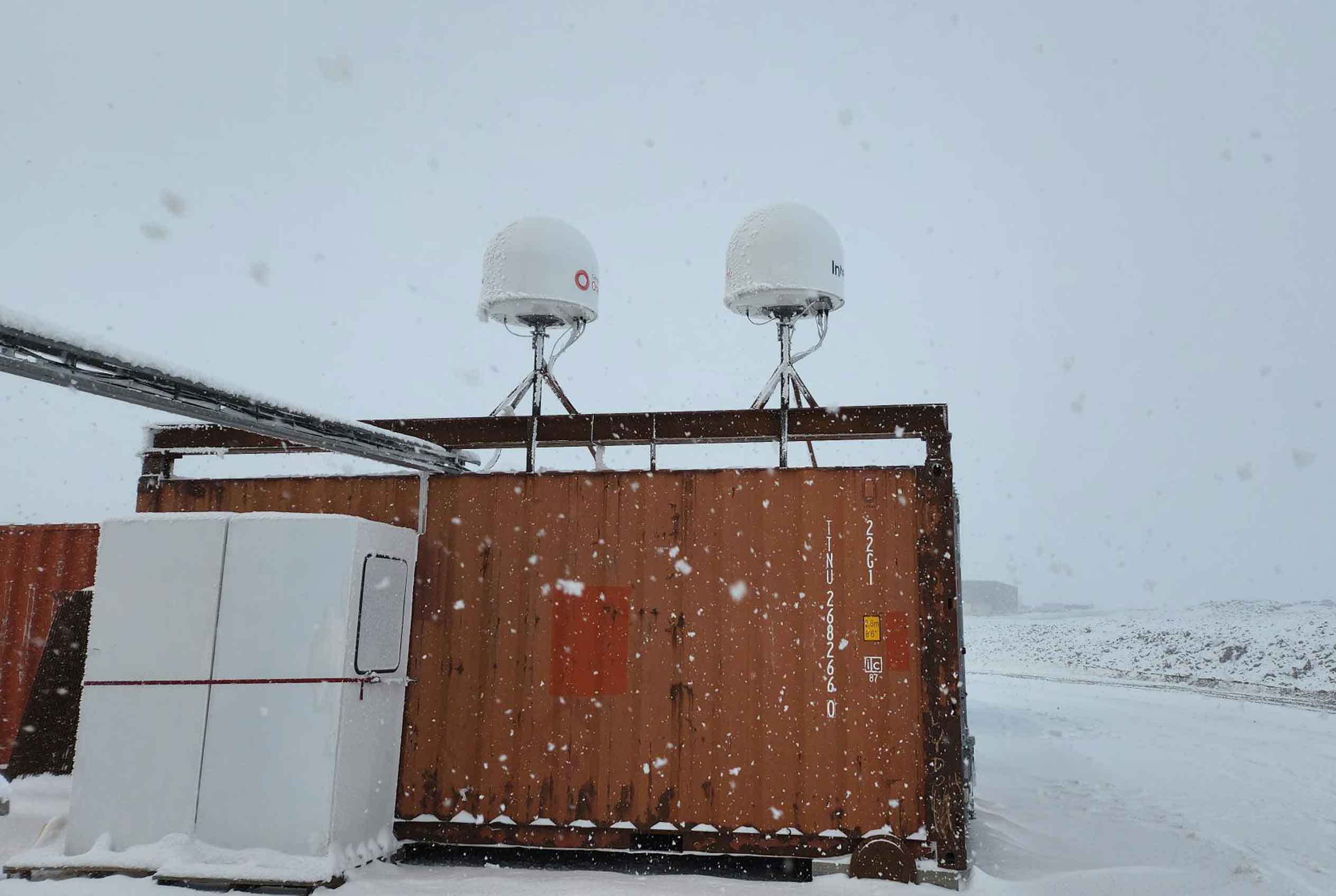
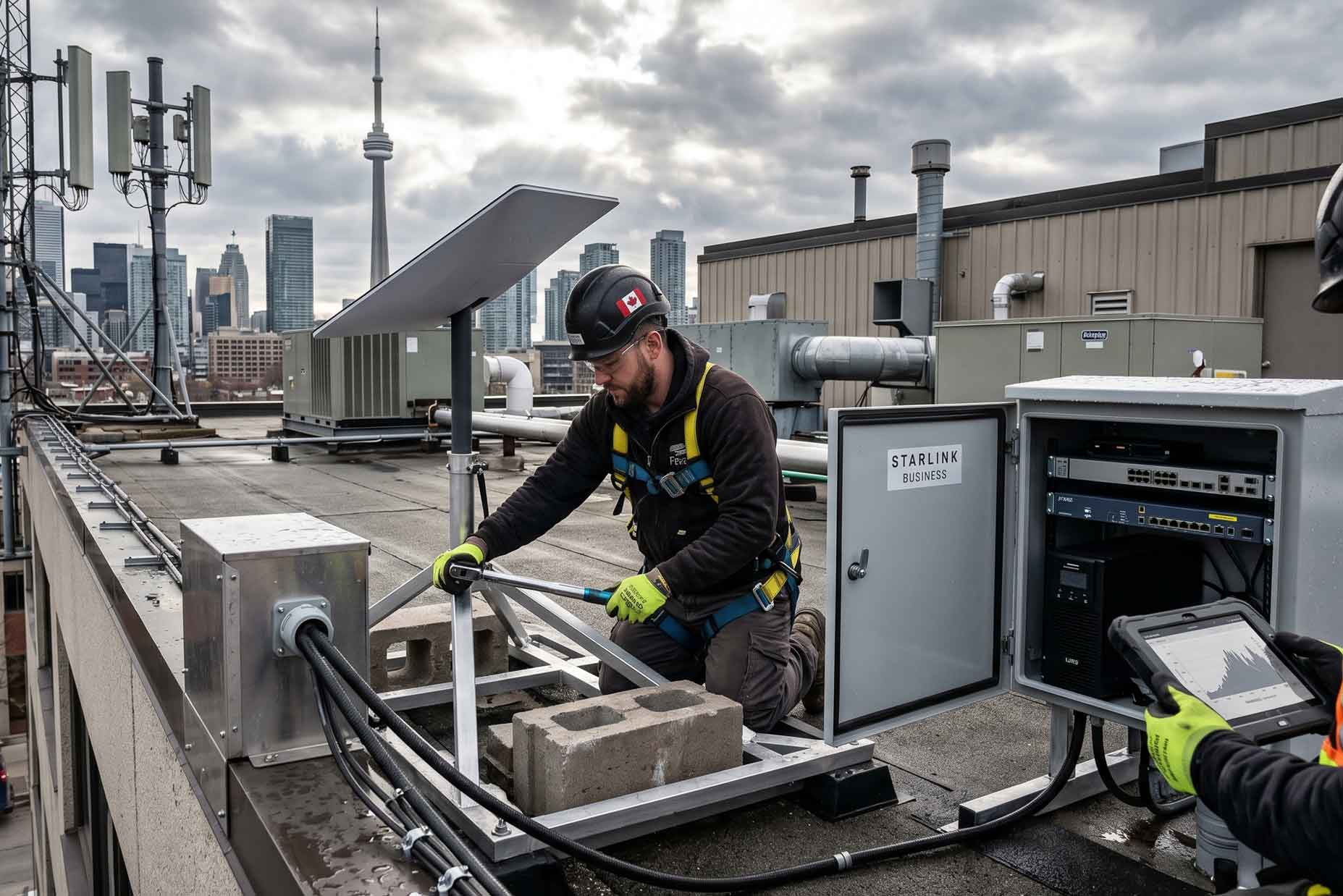
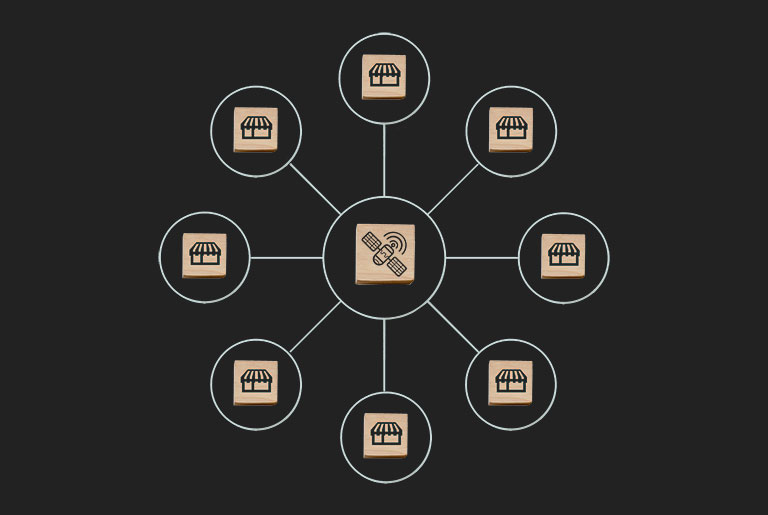
We solve this using dual-WAN satellite failover and edge processing. The system transmits less than 50 kilobits per second of sustained alert data. We pair OneWeb Enterprise for low-latency primary traffic and Starlink High Performance for high-throughput secondary tasks.
A FortiGate firewall manages this traffic using software-defined networking. It monitors the health of both satellite links twice per second. The firewall applies strict priority rules. Security alert notifications bypass crew internet traffic and operational data completely. Operators receive video surveillance AI analytics alerts instantly even when the satellite link is congested.
The Three-Layer Coverage Architecture
A perimeter security camera system outdoor deployment cannot rely on a single ring of cameras. A breach of a single layer leaves the interior blind. We construct concentric zones of visibility. Each layer serves a specific function.
The outer perimeter covers the fenceline or natural boundary. We use long-range motorized varifocal cameras here. Virtual tripwires detect inbound movement while ignoring personnel exiting the site. Loitering detection flags individuals lingering near the fence before a breach happens.
The access control points cover every vehicle and pedestrian gate. We deploy specialized dual-lens hardware for license plate recognition. These cameras use infrared wavelengths tuned specifically for reflective plates. They capture numbers accurately even when vehicle headlights wash out standard image sensors. The system cross-references approved lists locally and automates gate relays.
The inner high-value zones cover equipment laydown yards and generator buildings. Panoramic 360-degree cameras eliminate blind spots in wide compounds. Pan-tilt-zoom units track intruders automatically across the site using onboard machine learning.
Storage and Evidence Retention
Capturing an incident means nothing if the footage disappears before an investigation begins. A remote site cannot rely on a cloud server to store evidence.
We engineer local RAID storage arrays inside the network video recorders. A typical industrial site requires a minimum of 30 days of continuous recording. For high-risk deployments we specify 60 to 90 days of retention. An investigation by provincial law enforcement or an insurance company often takes a month just to initiate.
A 30-camera site streaming high-efficiency video requires massive capacity. We configure multi-drive arrays with fault tolerance. If a hard drive fails catastrophically, the array reconstructs the data without losing a single frame. All footage is encrypted at rest. Removing a physical drive provides an attacker with zero readable data.
Automated Deterrence
Security must be proactive. Documenting an incident after the fact does not recover stolen copper wire or replace damaged machinery.
We deploy active deterrence hardware at high-risk unmanned locations. When the system classifies a human threat, it executes a sequence automatically. The camera activates a 2000-lumen white-light spotlight. It triggers a localized verbal warning through built-in speakers. It pushes a live video clip to an on-call operator immediately.
This entire sequence completes in under two seconds. It happens locally. It does not wait for a human to review the footage or a server thousands of miles away to authorize the action. The sudden introduction of intense light and targeted audio interrupts the vast majority of casual thieves before they cross the perimeter.
Network Isolation and Cyber Security
Physical security cannot compromise digital security. An exposed network cable on an exterior fence presents a serious vulnerability.
We separate the surveillance hardware from your corporate network completely. We establish a dedicated virtual local area network. The cameras can communicate with the network video recorder but they cannot talk to the internet. They cannot access the crew network.
This isolation stops an attacker from unplugging an exterior camera, connecting a laptop, and pivoting into your operational technology network. We apply intrusion prevention signatures at the firewall level to block brute-force password attacks and firmware injection attempts. The hardware enclosures detect physical tampering and generate silent alarms if opened outside of approved maintenance windows.
Designing From Site Drawings
Hardware specifications matter. How you deploy that hardware matters more.
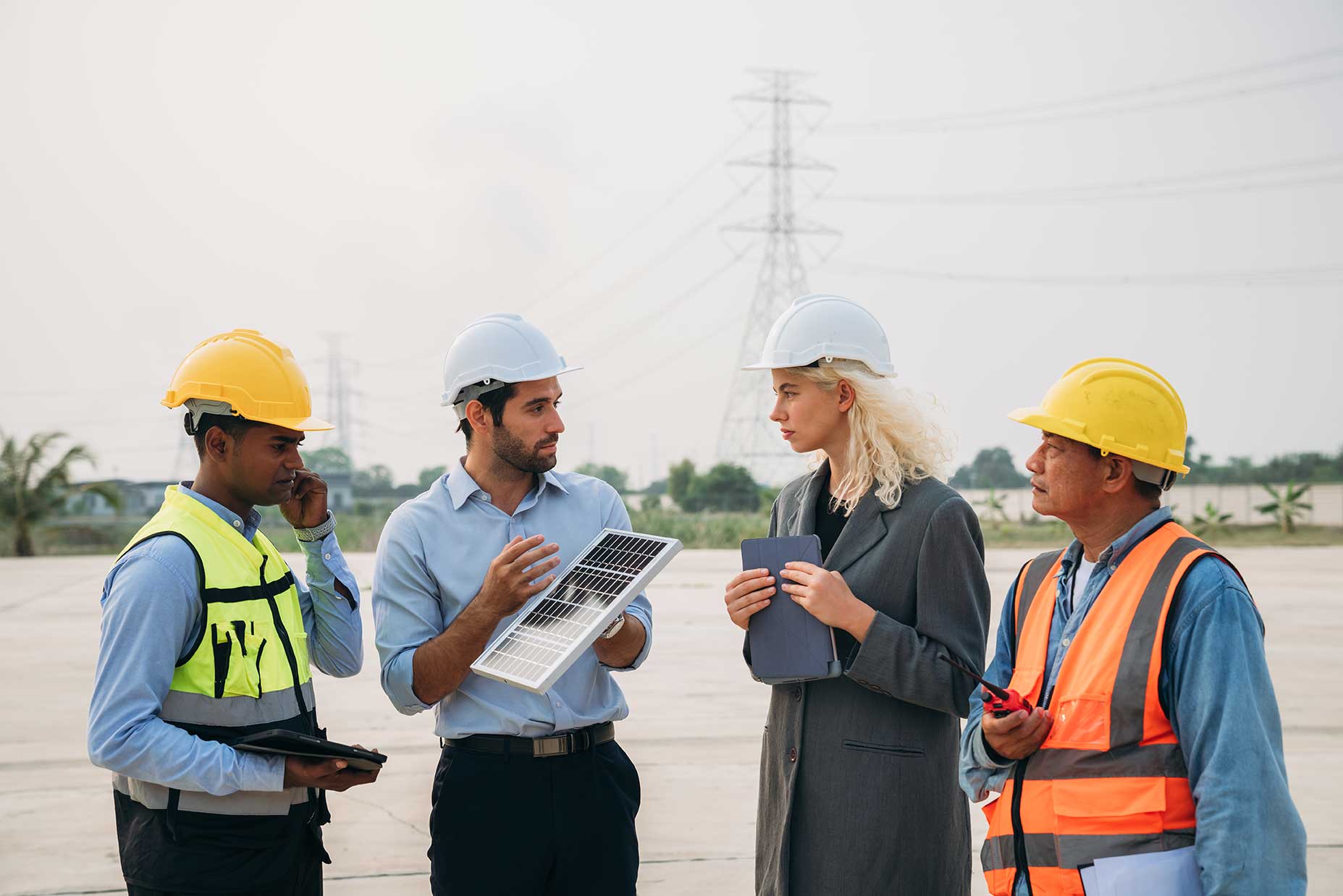
NTFS engineers security camera systems for harsh industrial environments. We do not sell generic camera bundles. A functional industrial security camera system requires precise geometry. A camera mounted too high or at the wrong angle cannot read a license plate or classify a face.
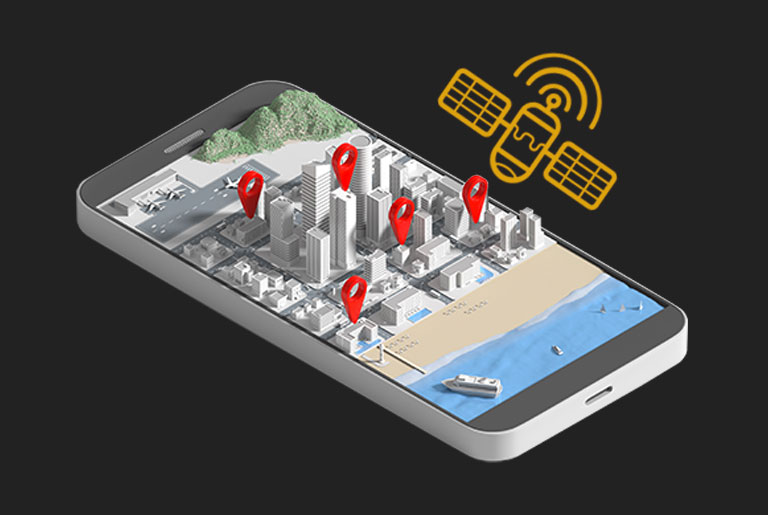
We design every system from your architectural drawings. We model field-of-view polygons, calculate infrared illumination boundaries, and identify terrain obstructions before proposing a single camera position. We ensure adjacent cameras overlap fields of view by 20 percent to eliminate blind spots. We verify line-of-sight against structures, seasonal vegetation, and stockpiled equipment.
The process dictates the network topology. We map out weatherproof switch enclosures, underground fiber trunks, and access-controlled server rooms. We isolate the camera network on a dedicated VLAN to prevent unauthorized access from the operational network.
A remote work camp or pipeline facility requires autonomy. It needs hardware that survives brutal weather, intelligence that filters out environmental noise, and a network architecture that guarantees alerts reach operators off-site.
Contact NTFS to assess your environment. Send us your site drawings. We will engineer the coverage plan, power architecture, and connectivity design necessary to secure your location.