
Canada is big. Really big. And getting good internet to everyone, from downtown Toronto to a small town in the Yukon, is a serious challenge. People need it—not just for Netflix, but for work, for school, for pretty much everything. When we talk about “good internet” these days, we usually talk about fiber optic cables. That’s where FTTX comes in.
FTTX just means “Fiber-to-the-X”—where X is how close that speedy fiber gets to you. If you’re involved in building these networks, you know the design part is where things get interesting. And tricky. It’s about getting it right for the long haul, especially with big plans afoot in Canada. And, as we’ve seen a few times, it really, really matters who’s actually doing the work in the field.
Let’s walk through what this FTTX stuff is about.
What’s FTTX, Really?
So, Fiber-to-the-X. The “X” can be a few places:
- FTTH (Fiber-to-the-Home): The fiber cable goes right into someone’s house. This is usually what people mean when they talk about “full fiber.” It’s the most direct path.
- FTTB (Fiber-to-the-Building): The fiber reaches an apartment building or an office. Then, existing wires inside usually take over for the last little bit to each unit.
- FTTC (Fiber-to-the-Curb): Fiber goes to a box on the street, not too far from a group of houses. Old-style copper phone lines often cover that last short hop.
There are other “X”s, but you get the idea. The main point is that fiber optic cables are much better at carrying information than the old copper wires. Think of it like swapping out a narrow, bumpy dirt road for a multi-lane paved highway. You get higher speeds—and not just for downloads, uploads get faster too. Things feel snappier. It’s also more reliable because light signals in glass aren’t bothered by things like electrical storms or rust, the way copper can be.
Canada Wants Everyone Online. What’s the Plan?
Now, here’s where it gets particularly Canadian. The government has noticed that not everyone has this good internet. And they want to fix it. They have something called the Universal Broadband Fund (UBF).
It’s a $3.225 billion proect. The aim is to get 98% of Canadians connected to high-speed internet by 2026. And everyone else by 2030. That’s ambitious.
A lot of it is meant for places that usually get left behind—rural areas, remote spots, Indigenous communities. Places where it might not make obvious business sense for a big company to build expensive new networks without some help.
A big programme like UBF pushing for network expansion usually means one thing: a lot more FTTX projects are going to happen. And that means a lot of thinking about how to design these new networks properly.
The People on the Ground—Why Good Techs Are Everything
Here’s something we’ve learned over the years: you can have the smartest network design on paper, but if the people actually installing and fixing it aren’t good, you’re in for a world of trouble.
These field service technicians do more than just plug things in. When we talk about an FTTX deployment:
- They carefully run and connect (splice) those tiny glass fibers. It’s delicate work.
- They install boxes (Optical Network Terminals, or ONTs) in homes or buildings that turn the light signals back into internet connections.
- They test everything to make sure it’s working as it should.
And later, if something goes wrong—a cable gets accidentally cut by a digger, or a piece of equipment fails—they’re the ones who have to figure out what’s broken and fix it. Fast.
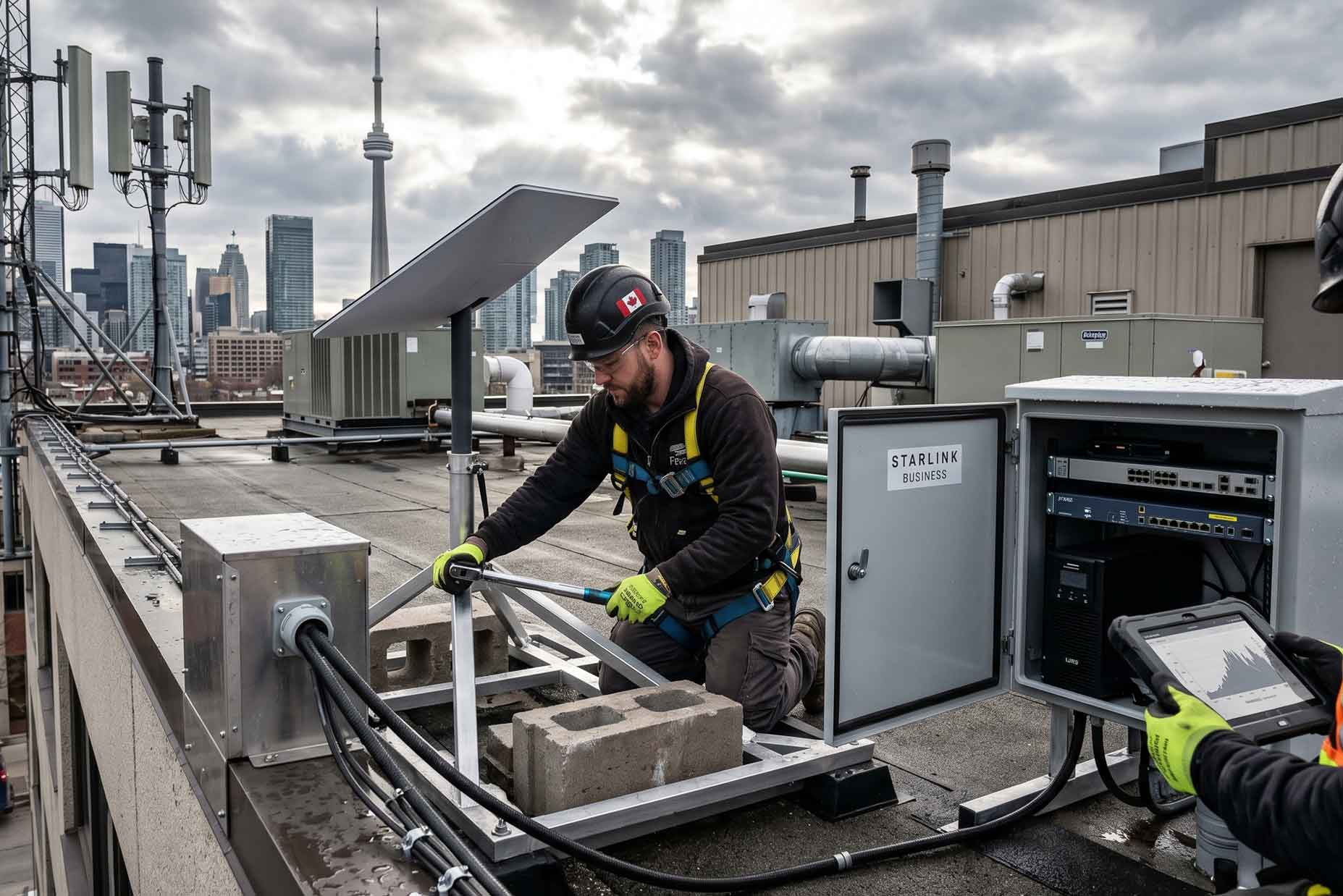
Now, think about doing this across Canada. It’s not like wiring up a new subdivision in a city where everything is flat and accessible. Technicians might be working in freezing temperatures, in places you can only get to by dirt roads, or dealing with older buildings where nothing is standard.
Having someone who knows what they’re doing, who is careful, and who can solve unexpected problems on the spot is not just nice; it’s essential. The quality of their work directly impacts how well the new FTTX network performs and how long it lasts.
What About Outsourcing Technicians? Does That Work?
If you’re an ISP or a municipality trying to get a UBF project off the ground, you might wonder where these skilled technicians will come from. Training people takes time, and managing a big field team is a lot of work in itself.
This is where the idea of outsourcing field services often comes up. Instead of hiring everyone yourself, you partner with a company, like NTFS, that already has teams of trained technicians.
Some people worry about outsourcing. Will the quality be as good? Will it actually save money? Will you lose control? Those are fair questions. My observation is that it depends entirely on who you partner with.
But done right, it can make a lot of sense:
- Skills on demand: You get access to experienced people when you need them for a project, without having to find and hire them all yourself for the long term.
- Flexibility: If a project is big, you can scale up. When it’s done, you scale down. That’s harder if they’re all your own employees.
- Focus: If your main business is, say, being an ISP, maybe you’d rather focus on that and let someone else worry about managing field crews, their trucks, and their specialized gear.
- Reach: Some service partners already have people in different parts of Canada, which can be a big help if your project covers a wide area.
The idea isn’t to just find the cheapest hands. It’s to find a partner who has good people and knows what they’re doing—someone who acts like an extension of your own team.
A Bit About Us—NTFS
This seems like a good spot to mention what we at NTFS do. We provide those skilled field service technicians for FTTX projects. That’s our focus.
Our people are certified and have experience with the nitty-gritty of fiber optic work—installations, splicing, testing, fixing things. We work in different parts of Canada, and we understand that a project in northern Alberta is different from one in rural Ontario.
The main thing we aim for is reliability and quality. We know that if our technicians do a good job, the network works better, and our clients are happier. It’s pretty straightforward. We’ve worked with various ISPs and organizations on their FTTX rollouts, helping them get their networks built and running.
So, What Now? Building Canada’s Internet, Thoughtfully.
Getting high-speed internet to everyone in Canada is a big, important job. FTTX is clearly the way to do it for the long term. And the Universal Broadband Fund is helping push things along.
But as we’ve seen, just throwing money and cables at the problem isn’t enough. The FTTX network design needs to be smart. And the skilled deployment by good technicians is just as important as the design itself. These two things go hand-in-hand.
If Canada is going to meet its connectivity goals, it will take a lot of collaboration. ISPs, municipalities, funders, and service partners all have a part to play.
If you’re working on an FTTX project in Canada and thinking about how to handle the on-the-ground part, maybe we should talk. NTFS might be able to help you get where you need to go.