We’ve gotten used to being connected. Internet access feels almost like a utility now – expected everywhere, from downtown offices to airplanes. But this expectation runs into problems when work happens far from the usual infrastructure. Think about running a mining operation deep in Northern Canada, managing a construction site before the roads are even fully paved, or keeping track of a fleet of trucks crossing the country. In these places, reliable, fast internet isn’t a given.
For a long time, the options were limited: slow, expensive satellite links that felt like a throwback, or maybe just no connection at all. This isn’t just inconvenient. It makes it harder to run a modern business efficiently. Work slows down when you can’t easily share data, monitor equipment remotely, or have a clear video call. It can affect safety too. And it makes using newer digital tools, the kind that depend on a solid connection, difficult or impossible.
But satellite internet is getting better—a lot better. The main change involves new kinds of antennas—flat ones. These aren’t the big, curved dishes you might picture. They’re called flat panel antennas, and they work with newer satellite networks, especially those orbiting closer to Earth (Low Earth Orbit, or LEO), to provide faster internet with less delay. This portable satellite internet is quickly becoming a practical way for industries working in remote areas to get the portable connectivity they need.
Why Good Internet Matters Out There
The need for better connectivity isn’t abstract. It comes down to the specific work in these remote Canadian locations.
- Mining and Oil & Gas: These operations are often in remote spots, sometimes with extreme weather. They need to send data from sensors, monitor equipment, and control some things remotely. Good communication is also essential for safety, and using modern data tools or IoT sensors without a reliable connection is a persistent problem.
- Construction: Projects often start on undeveloped land with no existing network. Teams need internet for project management software, sharing large design files (like BIM models), video calls for collaboration, and site security. Poor internet causes delays.
- Transportation (Trucks, Trains, Ships): Moving goods efficiently requires knowing where things are and communicating reliably. Trucks, trains, and ships need constant connections for tracking, checking vehicle health, talking to dispatch, and optimizing routes – called “Comms on the Move” (COTM). Older satellite systems often struggled to connect when the vehicle moved.
- Emergency Response: Local communication networks can fail during fires, floods, or other emergencies. First responders must set up command centers quickly and communicate reliably, even when other systems are down.
- Utilities: Managing power lines or pipelines across large areas requires monitoring remote equipment and communicating with field crews.
The common thread is a need for reliable, reasonably fast internet that works consistently, even in tough conditions or when moving. This is where the new antenna technology fits in.
Flat Panels: Why No Moving Parts is Better
What’s different about flat panel satellite internet? It’s mainly how the antenna points at the satellite.
Traditional “on the move”satellite dishes use motors to physically tilt and turn the dish to follow a fixed satellite while on the move These mechanical parts can wear out or break, especially when a vehicle vibrates, rough seas, or is exposed to very cold temperatures.
Flat panel antennas, particularly the electronically steerable kind (ESAs), mostly avoid major moving parts. Inside, they have a grid of many small antenna elements. A computer controls the signal to each element, adjusting the timing (the phase) very precisely.
This allows the antenna to electronically “steer” the combined radio beam towards the satellite without the antenna itself having to move physically.
This electronic steering provides several practical advantages:
- Smaller and Lighter: These antennas are more compact without the motors and large dish structure. This makes them easier to transport, set up for temporary use (“Comms on the Pause” or COTP), and mount on vehicles or structures with limited space and weight. This is key for portable connectivity.
- More Reliable: Fewer moving parts generally means fewer failures, especially in rough industrial environments. This can lead to less downtime and fewer service trips to remote sites.
- Works While Moving: Because the beam steering is electronic and very fast, the antenna can maintain a connection even when mounted on a moving truck, train, or ship. This enables effective COTM.
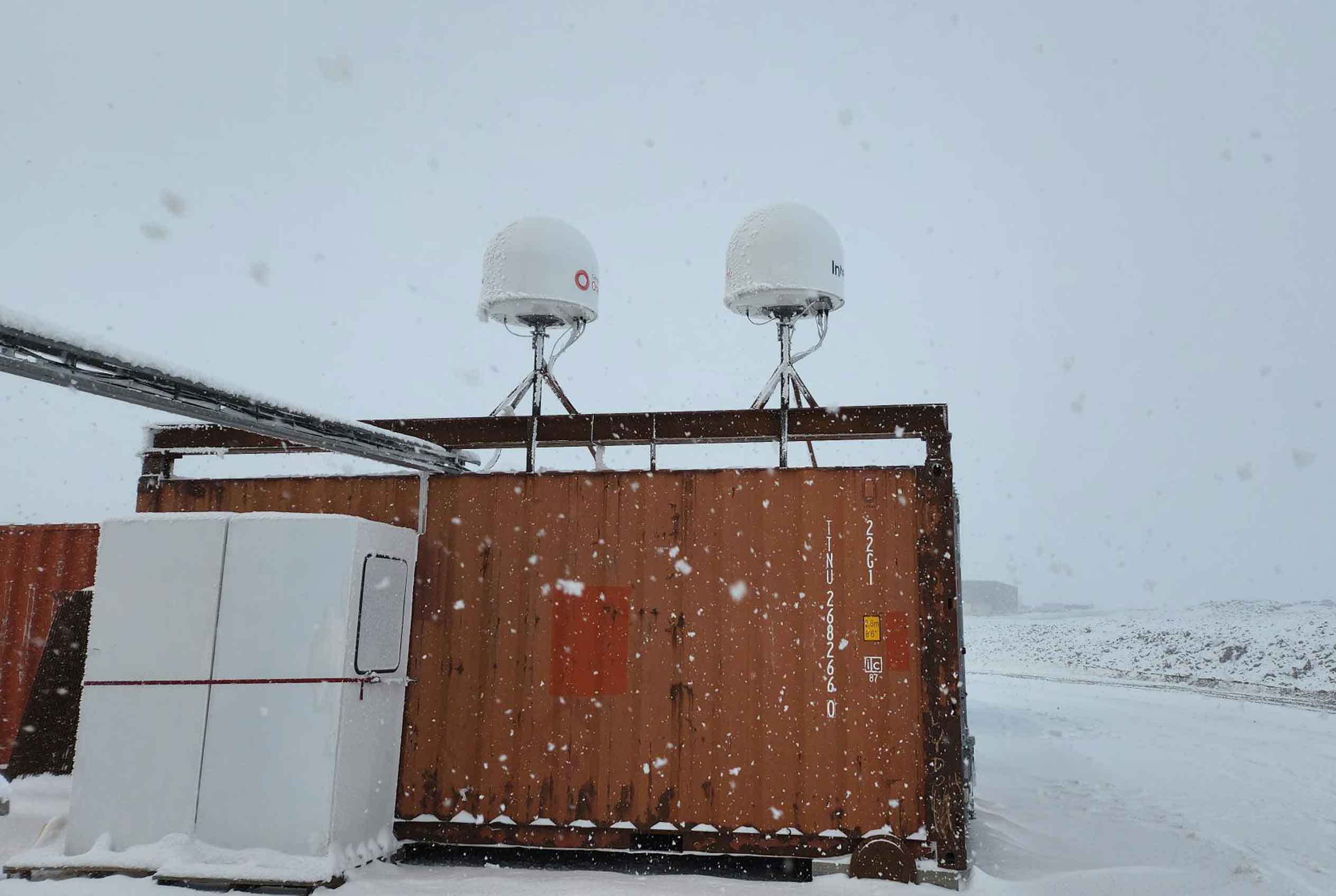
- Handles Weather Better: The flat shape is less affected by wind than a large dish. Many are built to be weather-resistant (look for IP ratings like IP66 or IP67), and some have heaters for dealing with snow and ice.
- Good for LEO Satellites: Newer satellite networks, like Eutelsat OneWeb, use satellites in Low Earth Orbit (LEO). These satellites move quickly across the sky from the perspective of someone on the ground. The antenna needs to switch its connection from one satellite to the next rapidly and smoothly. Electronic steering is well-suited for this.
The improved reliability is important. Fewer mechanical failures mean less disruption to operations, which can be very costly in sectors like mining or emergency response.
What This Looks Like in Practice
How does this portable satellite internet help specific industries?
Consider a mining exploration team setting up camp. They can set up a flat panel antenna relatively quickly instead of waiting for a connection or dealing with unreliable service. This gives them a solid internet link for sending geological data, making calls, and accessing safety systems.
Or a construction site. A portable flat panel can provide internet from the start. This allows teams to use cloud-based project software, share large design files, hold video meetings, and monitor security cameras. If the site office moves, the connection can move too.
For trucking companies, flat panel antennas on vehicles allow for continuous tracking, better route planning, instant communication with drivers, and potentially monitoring cargo conditions. It helps manage the fleet more effectively.
In emergencies, crews can arrive with vehicles equipped with these antennas. They can quickly establish a communication hub, coordinate efforts, access maps, and share information, even if local cell networks are overloaded or damaged.
Utilities can use them to connect remote substations or monitor pipelines, reliably retrieving data from locations far from wired networks.
This technology starts to remove the connectivity barrier that previously made it hard to use many digital tools in these remote industrial settings. Things like large-scale sensor networks (IoT), remote equipment operation, or real-time data analysis become more feasible.
Real Products, Not Just Ideas
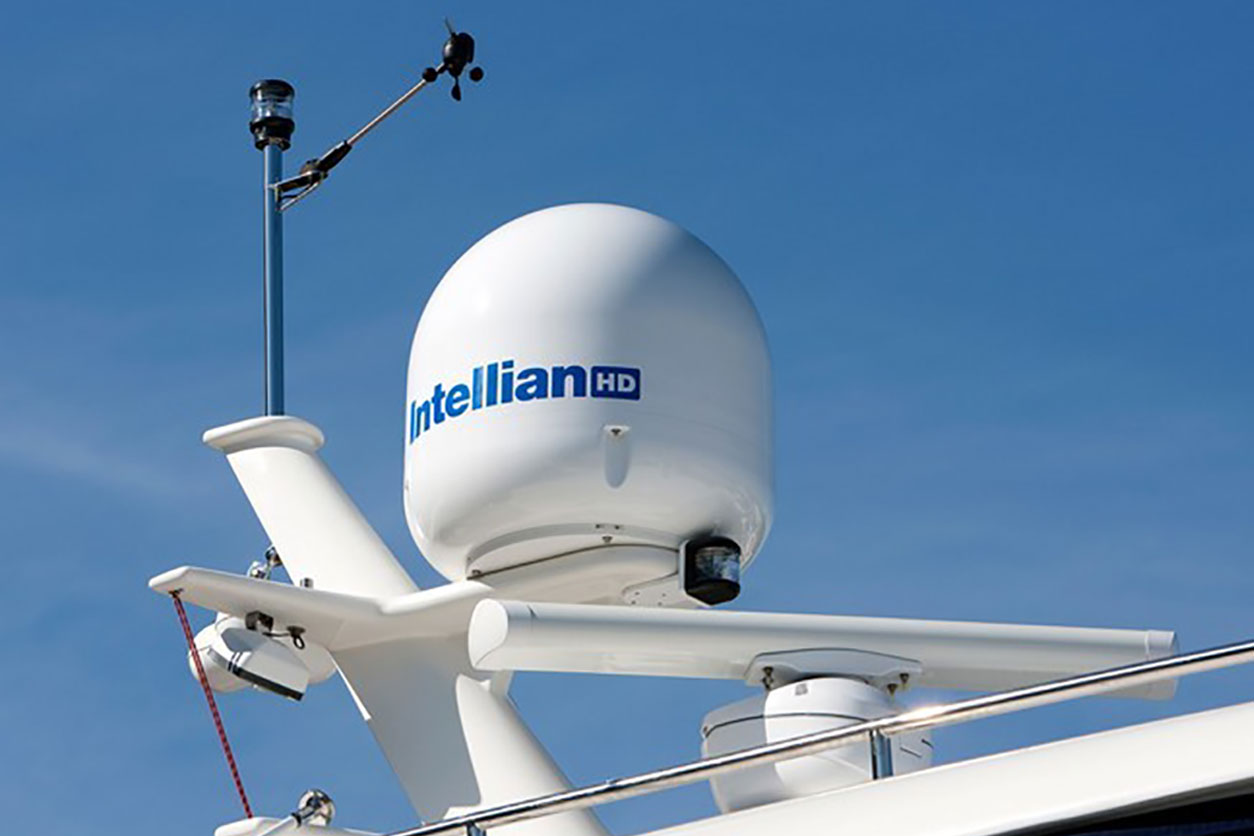
This isn’t just a concept; companies are selling these systems now. You can find products from Intellian, like their OW series, and Hughes Network Systems, with their LEO terminals (HL1100, HL1120) designed for networks such as Eutelsat OneWeb.
These are generally built for industrial use – designed to be durable, weather-resistant (often IP66 or IP67 rated), and reliable. Intellian offers different models, some focused on being compact (Size, Weight, and Power or SWaP), others on maximizing performance. Hughes emphasizes integrated designs and has published performance data showing significant speeds and low latency. The point is, the hardware exists and is being deployed.
Why Installation Isn’t Trivial
Having the right antenna isn’t the whole story. How and where it’s installed matters significantly, especially in tough industrial environments.
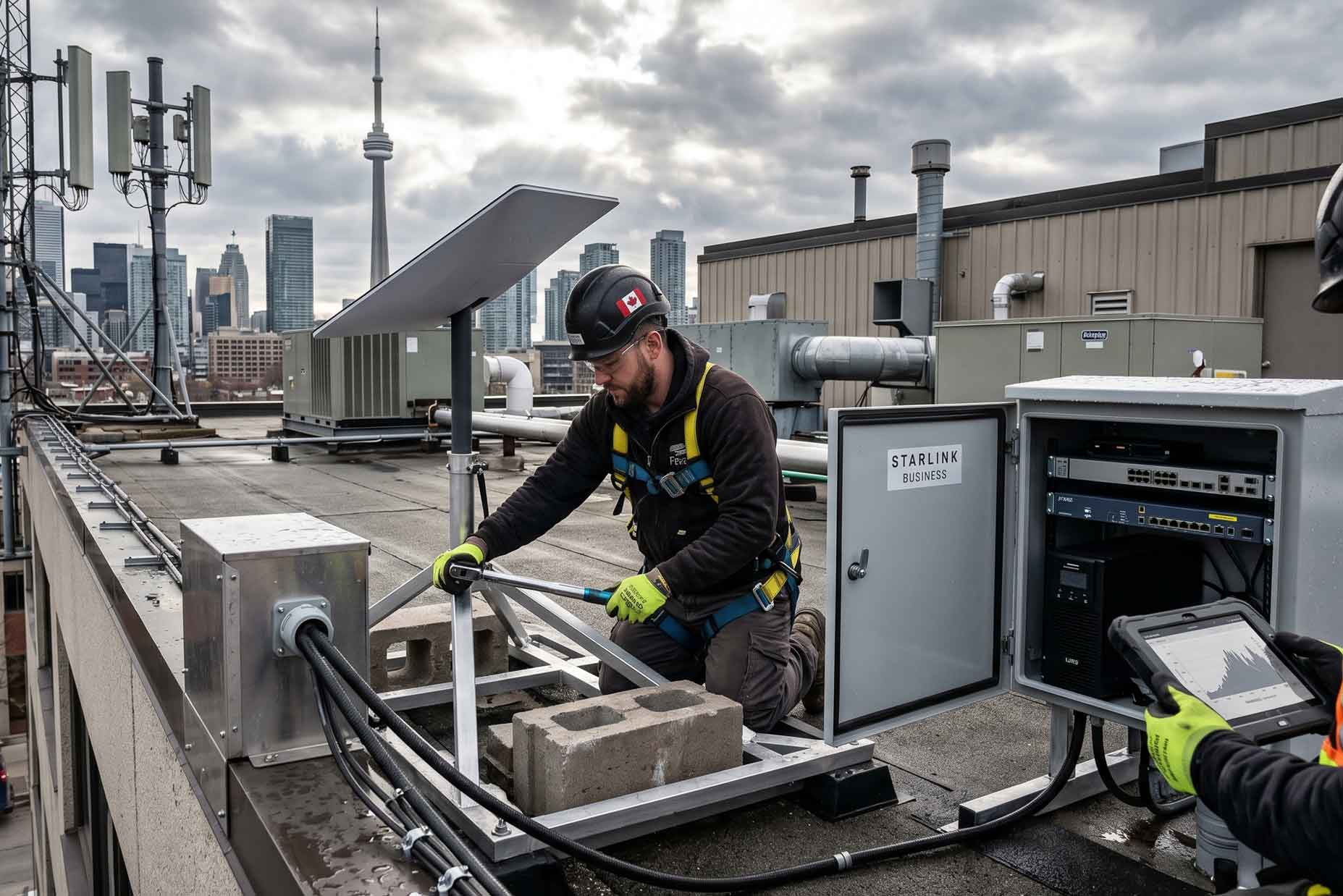
The antenna needs a clear view of the sky. It needs to be mounted securely to withstand weather and any vibration. Cables need to be run correctly and protected from the elements. The system needs proper configuration to connect to the satellites, especially the fast-moving LEO ones.
While some simpler satellite systems might allow for self-installation , for a business depending on this connection for critical operations, doing it yourself might lead to problems. An incorrect installation can result in poor performance, dropped connections, or equipment failure.
The Value of Experienced Installers
This is why specialized installation providers exist. You need people who understand satellite technology, networking, and the practicalities of working in remote Canadian locations.
National Technical Field Services (NTFS) specializes in this type of work. We have a network of over 65 technicians across Canada who install and maintain communication equipment for businesses. Our services include site surveys to plan the installation, professional mounting and cabling of equipment (satellite systems like LEO, GEO, VSAT, plus other network gear), and testing to ensure it works correctly.
We have 15 years of experience and work across industries like Oil & Gas, Utilities, and Mining, supporting thousands of business connections. We’re an exclusive installation partner for Hughes Network Systems in Canada.
The quality of the installation is important for industrial operations, where a failed connection means lost money or potential safety issues. Using experienced installers seems like a way to reduce the risk of problems and ensure the technology works as expected from the start.
Connecting Remote Operations
So, the situation is that many Canadian industries operate remotely and need better internet. New flat panel antenna technology, especially with LEO satellites, offers a way to provide portable satellite internet. Companies like Intellian and Hughes make the equipment. But proper installation is key to making it work reliably in industrial settings, and specialized installers like NTFS exist to handle that part.
The technology and the expertise are now available to connect remote operations much more effectively than before. This isn’t just about convenience; it’s about enabling businesses to operate more efficiently and safely, regardless of their location.
If your business operates remotely and struggles with connectivity, exploring these newer satellite options seems worthwhile.